Key Takeaways
Colic in horses is an emergency. Recognise the early signs and what to do while waiting for the vet. Free WhatsApp consultation.
Colic in Horses: Why It Is an Emergency and What to Do
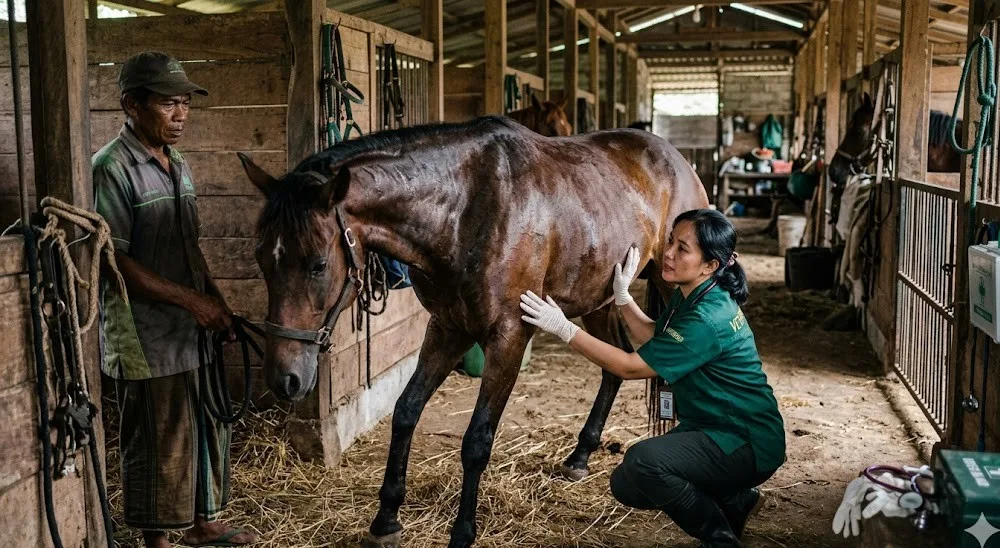
Of all the things that wake horse owners at midnight with worry, colic may be the most common. The word "colic" is not actually the name of one disease, but a term for abdominal pain in horses. The causes can vary, from mild and quickly resolving to life-threatening. The problem is that from the outside we cannot always tell which. That is why colic is always treated as a serious situation until proven otherwise.
I write this not to frighten, but so you and your groom can recognise the signs earlier and know what is sensible to do while waiting for help.
Why a Horse's Gut Is So Vulnerable
Don't Wait Until It's Too Late!
A horse has a long, winding digestive tract, with some sections that hang and can easily twist or block. On top of that, horses cannot vomit. Whatever goes in must keep moving forward. When there is a disturbance in gut movement, whether from feed, dehydration, sudden change, or other causes, pain arises and the horse shows it in its own way.
Because of this anatomy, a problem that might be trivial in other animals can become serious in a horse. And because a horse cannot tell us where it hurts, we have to read its body language.
Colic Signs You Need to Recognise
The following signs, especially when they appear together, indicate a horse is in pain in the abdominal area.
- The horse becomes restless, pawing the ground with its front legs, or kicking and looking towards its own belly.
- The horse lies down and gets up repeatedly, or rolls more often than usual.
- Appetite is lost and the horse moves away from feed it usually likes.
- Sweating appears without heavy activity, breathing and pulse feel faster, and the horse looks dull and withdrawn.
- Dropping production decreases or stops entirely.
Not all colic looks dramatic. Sometimes all you see is a horse quieter than usual that refuses food. This unusual stillness is sometimes more worrying than a clearly restless horse.
What You Should Do
Once you suspect colic, the first step is to contact a vet, do not wait to "see if it improves". In colic, time is a deciding factor.
While waiting, stop feeding so the digestive tract does not carry an extra load. Move away objects that could injure the horse if it rolls. Note what you see, when it started, and when the horse last ate and passed droppings, because this information greatly helps the vet assess. If the horse rolls violently and endangers itself, leading it on a slow walk sometimes helps, but do not force a horse that is already very weak, and put your own safety first.
What you should not do is give pain relief on your own initiative without a vet's guidance. Such medicine can mask symptoms and make the severity assessment wrong. Proper care starts from confirming what is really happening, not covering up the pain.
Ask the vet by your horse type
Pick your horse and the chat opens pre-filled so our team knows exactly which type it is.
Why Early Assessment Matters So Much
Most colic can improve with timely care. A small portion needs further intervention at a special facility. What decides the outcome is often not the type of colic, but how quickly it is assessed and treated. That is why a quick consultation is far more valuable than waiting.
Free Consultation via WhatsApp
If your horse shows signs that worry you, do not wait long. Contact us over WhatsApp for a free consultation, tell us what you see, and we assess together how urgent the condition is and the next step.
See also Equine Vet: Ambulatory Service to Stables and Equine Lameness: Reading the Signs.
Frequently Asked Questions
Is all colic dangerous?
Can I give pain relief while waiting for the vet?
Does walking the horse help during colic?
What are the most common causes of colic?
Can I consult first before a visit?
Medically Reviewed by
Birawa Vet Medical Team
This article has been verified by our medical team to ensure veterinary information accuracy.
The information in this article is for general educational purposes only and is not a substitute for direct consultation with a veterinarian.
Every pet has unique conditions. Do not hesitate to seek professional help if your pet is sick.
Share Article
Senior Pets Need Special Care
Not sure if your pet's symptoms are normal or urgent? Tell our vet — we help evaluate without requiring immediate booking.
Read Next
View All
When to Skip the Emergency Vet: A DIY Triage Guide for Pet Owners
Not every pet emergency requires a 24-hour animal hospital. A DIY triage guide for pet owners: when a home visit works, when an. Free WhatsApp consultation.
Cat Foaming Mouth & Seizures? Stop the Bear Brand Myth!
Your cat suddenly foaming at the mouth, vomiting, or having seizures? Don't give milk or coconut water — it can be fatal! Learn the. Free WhatsApp consultation.

Rabbit Won't Eat & Has a Bloated Belly (GI Stasis)? Here's First Aid!
Is your rabbit hunched over, refusing food, and has a hard belly? Watch out for GI Stasis! This condition can kill a rabbit within. Free WhatsApp consultation.