Key Takeaways
Equine ambulatory vet with drh. Muhammad Arif. Horse examinations right at your stable in Jabodetabek, without moving the horse. Free WhatsApp consultation.
Equine Vet: Ambulatory Service to Stables in Jabodetabek
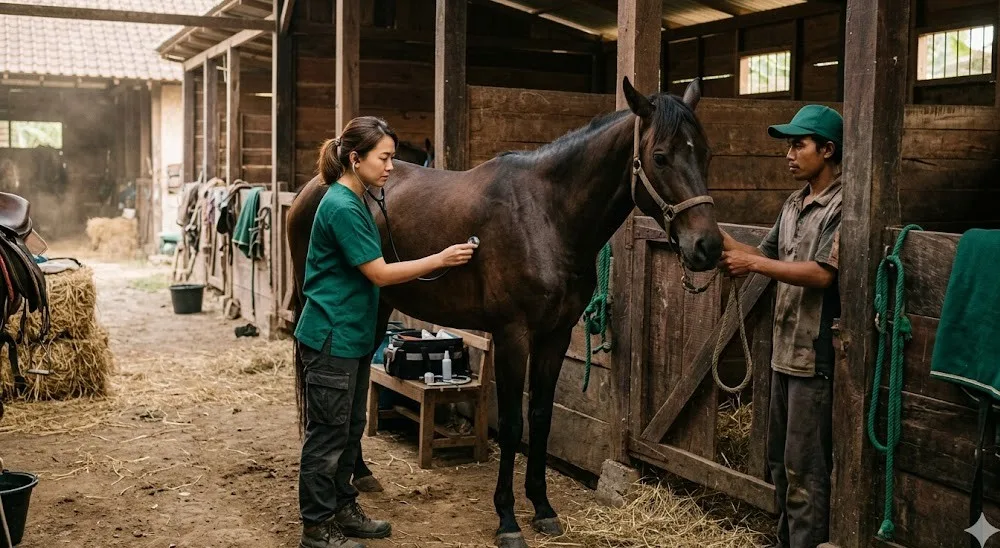
A horse is large, strong, and at the same time far more fragile than people think. Over my time treating animals in the field, I learned that many serious problems in horses do not arrive loudly. They arrive quietly: a slightly reduced appetite, a slightly different gait, or a horse standing apart from the herd. Observant owners and grooms often catch these signals before anyone else, and that is where the vet's role becomes important.
I wrote this for horse owners, stable managers, and the equestrian community in Jabodetabek who want to understand how an equine vet service works, and why the ambulatory approach, where the vet comes to the stable, makes sense for an animal this size.
Why Horses Are Examined at the Stable, Not Taken to a Clinic
Don't Wait Until It's Too Late!
Moving an unwell horse is no small matter. Loading and unloading a trailer, the journey, and unfamiliar surroundings add stress to an already weak animal, and stress in a horse is not trivial because it can trigger or worsen digestive trouble. So for most examinations, it actually makes more sense for the vet to come to the stable.
Coming to the stable also gives me a picture you would not see in a clinic: the bedding condition, the quality and method of feeding, the water source, the horse's work pattern, even how it moves in an area it knows. Many equine problems are rooted in stable and feed management, and those read most honestly in their own place.
What Can Be Handled Through an Ambulatory Visit
I do not call myself an equine specialist, because that title has its own formal path. What I can honestly say is that I am experienced in handling animals in the field and understand that horses demand their own care. This ambulatory service focuses on general health examinations, body condition assessment, routine care, initial evaluation of a horse that looks unwell or has changed behaviour, and discussion of feed and stable management.
For needs requiring special facilities, such as major surgery or advanced imaging, the honest step is to refer to a facility properly equipped for it. For me, directing you to the right place is part of the service, not a shortcoming.
Ask the vet by your horse type
Pick your horse and the chat opens pre-filled so our team knows exactly which type it is.
Signs That Should Not Be Delayed
There are conditions in horses that should not wait until tomorrow. If you or the groom sees one of these, it is best to consult right away.
A horse that is restless, rolling repeatedly, kicking towards its belly, sweating for no clear reason, and refusing to eat is the classic picture of colic. Colic in a horse is an emergency and every hour matters.
A horse that suddenly becomes severely lame, reluctant to bear weight on one leg, or stands in an unusual posture also needs prompt assessment, because some causes of acute lameness can worsen if left.
Likewise a horse that stops eating and drinking for a long time, heavy or noisy breathing, and drastic changes in the shape and amount of its droppings. In an animal this size, those signs still need to be read seriously.
How the Visit Works
The process starts with a brief chat over WhatsApp about what you observe. From there I help judge how urgent it is, then we arrange a visit to your stable in the Jabodetabek area. The examination is done as calmly as possible so the horse does not get agitated, and afterwards you receive an honest explanation of what is happening and the sensible next step, including when a referral is best.
Consult First, Calm First
Not everything has to end with a visit. Sometimes all you need is certainty about whether this is an emergency or can be watched first. The initial WhatsApp consultation is free, and I would rather you ask too soon than regret asking too late. Tell me what you see in your horse, include a photo or video if you have one, and we find the most fitting step together.
Want to read more? See Colic in Horses: Why It Is an Emergency and Equine Lameness: Reading It Before It Becomes a Big Problem.
Frequently Asked Questions
Can a horse really be examined at the stable without being taken to a clinic?
My horse just looks a little dull, not severe. Do I need to call a vet?
Does this service handle major surgery or advanced imaging?
Which areas are served?
Is the initial consultation charged?
Medically Reviewed by
Birawa Vet Medical Team
This article has been verified by our medical team to ensure veterinary information accuracy.
The information in this article is for general educational purposes only and is not a substitute for direct consultation with a veterinarian.
Every pet has unique conditions. Do not hesitate to seek professional help if your pet is sick.
Share Article
Senior Pets Need Special Care
Not sure if your pet's symptoms are normal or urgent? Tell our vet — we help evaluate without requiring immediate booking.
Read Next
View All
Cat Vaccination West Jakarta: Home Visit to Grogol, Tomang & Kemanggisan
Cat vaccination in West Jakarta without the Grogol traffic drama. Vet comes to Grogol, Tomang, Kemanggisan, Palmerah & nearby — maintained cold chain, official vaccine booklet, flexible schedule.
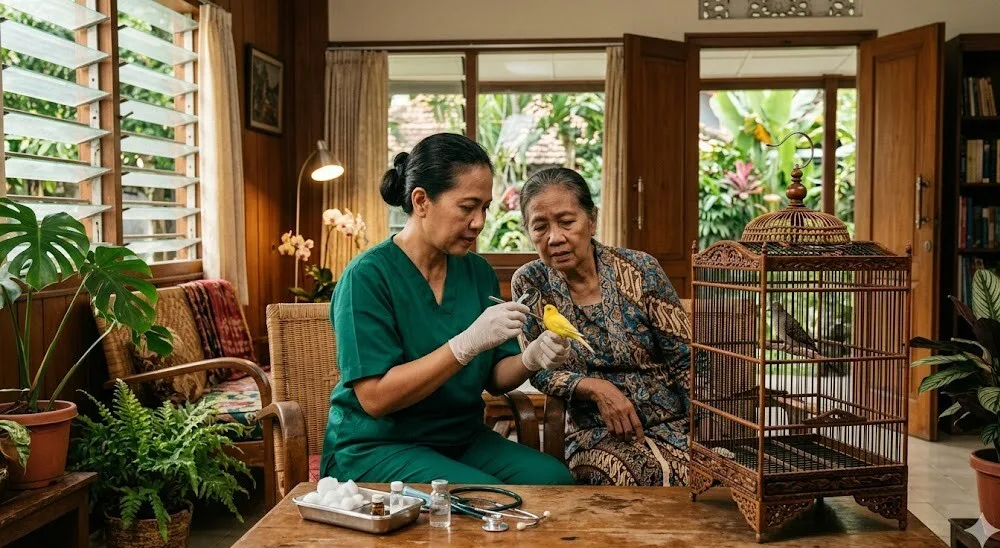
Bird Vet Home Visit in Jabodetabek
Bird vet home visits across Jabodetabek with drh. Muhammad Arif. Calm, careful avian care at home, without the stress of travel. Free WhatsApp consultation.
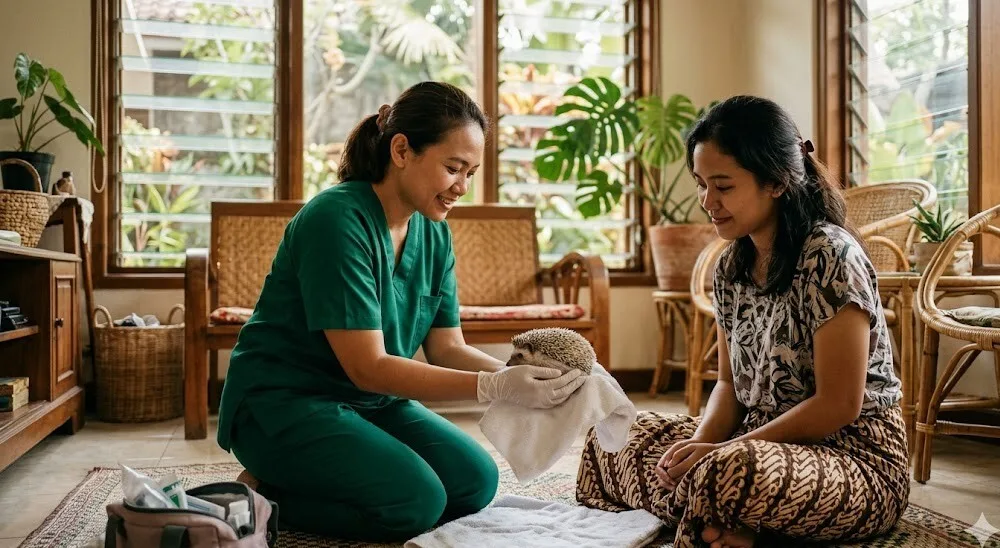
Exotic Pet Vet Home Visit in Jabodetabek
Looking for an exotic pet vet who does home visits across Jabodetabek? Hedgehogs, sugar gliders, hamsters, and reptiles handled by drh. Muhammad Arif. Free WhatsApp consultation.