Key Takeaways
Your sulcata on a food strike? Often it is not about taste but temperature, light, and enclosure care. Learn the causes and when to see an exotic vet. Free WhatsApp consultation.
Sulcata Tortoise Won't Eat: Causes and When to See a Vet
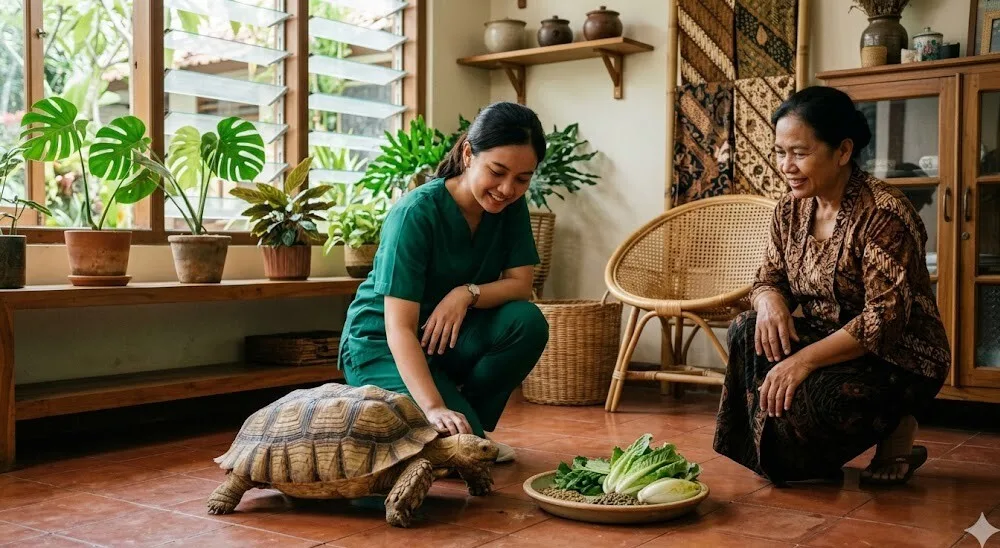
The sulcata is one of the most commonly kept land tortoises, and also one that most often worries its owner when it suddenly stops eating. Whenever someone tells me "my sulcata won't eat", the first question I ask is usually not about the type of food but about the enclosure's temperature and light. Because in reptiles, a food strike is far more often rooted in the environment than in taste.
Reptiles are different, and that is the key
Don't Wait Until It's Too Late!
This is a fundamental point I want to stress first. The sulcata is a cold-blooded animal, which means its body temperature depends on its environment. Its digestion, appetite, and immune system will not work well if the enclosure temperature is not right. They also need suitable light exposure for their metabolism. So when a sulcata stops eating, I do not immediately assume it is internally ill. Very often, its body is simply too cold to digest, and appetite is the first thing to disappear. Understanding this keeps us from panicking in the wrong direction, while also not underestimating the problem.
The causes I most often encounter
A few things that commonly play a part when a sulcata goes on a food strike:
- An enclosure that is not warm enough. This is one of the most common causes. As a cold-blooded animal, the sulcata depends on environmental warmth to digest its food. Without enough warmth, its digestion slows and appetite is usually the first thing to go.
- Inadequate lighting. A sulcata needs UVB exposure to form vitamin D3, which its body uses to absorb calcium. Long-term UVB deficiency harms bone and shell health, and can also lower its overall condition and appetite.
- An unsuitable diet. The sulcata is a herbivore that needs plenty of fibre from grass and greens. A diet too rich in protein or too much fruit can actually upset its digestion.
- Dehydration. Poor access to water or rarely being soaked can leave it sluggish with a reduced appetite.
- Medical problems. Respiratory infection, digestive issues, or metabolic conditions can make it refuse food, sometimes with other symptoms.
Because the causes can overlap, a food strike in a sulcata is best seen as a signal to review enclosure care while also watching for other symptoms.
Ask the vet by your pet's species
Pick your animal and the chat opens pre-filled so our team knows exactly which species it is.
Signs that make me ask you not to wait
A food strike of a few days in a reptile is not always as critical as in a small warm-blooded animal, because its metabolism is slower. But there is a combination of symptoms that makes me want to step in right away:
- A prolonged food strike with a weak, unresponsive body.
- Swollen, watery, or closed eyes.
- A constantly gaping mouth, mucus, or audible breathing sounds (a sign of respiratory trouble).
- A runny nose or mucus bubbles at the nostrils.
- A shell that softens, changes shape, or has wounds.
- No droppings for a long time, or visible straining in pain.
- The neck often extended with breathing that looks laboured.
If any of these appear, do not just fix the enclosure and wait. That is the time to ask for a vet assessment.
What you can check while contacting me
While letting me know, it is good to check a few simple things. Make sure there is enough warmth in the enclosure and the sulcata has access to bask. Make sure the enclosure lighting works and has not been off for a long time. Offer fresh greens and grass, not a fruit-dominated diet. Provide clean water, and do a brief soak in lukewarm water to help hydration. Note since when it stopped eating, the enclosure temperature, and any other accompanying symptoms. This simple information greatly helps me judge whether it is a husbandry issue, a medical one, or both.
I advise against rashly changing the diet drastically or giving supplements carelessly without knowing the cause. In reptiles, many problems are actually born of good intentions that miss the mark.
Start with a conversation first
A sulcata does look tough with its shell, but precisely because of that, owners often realise late that something is wrong. If your sulcata is on a food strike and you are not sure whether it is about temperature, diet, or its health, just tell me first. The initial WhatsApp consultation is free, and from there we can trace together what needs fixing first, and whether a direct examination is needed.
Want to read more per species? See Exotic Pet Vet Home Visit Jabodetabek, a hedgehog refusing food or bloating, a sick hamster, and a sick sugar glider.
Frequently Asked Questions
Why has my sulcata tortoise suddenly stopped eating?
How long can a sulcata go without eating before it is dangerous?
Is it enough to just fix the enclosure temperature and lighting?
Can I give supplements or change the diet when my sulcata is on a food strike?
Can a vet examine a sulcata tortoise at home?
Medically Reviewed by
Birawa Vet Medical Team
This article has been verified by our medical team to ensure veterinary information accuracy.
The information in this article is for general educational purposes only and is not a substitute for direct consultation with a veterinarian.
Every pet has unique conditions. Do not hesitate to seek professional help if your pet is sick.
Share Article
Need an Exotic Pet Vet?
Our vet understands exotic pet anatomy and medical needs — coming directly to your home.
Read Next
View All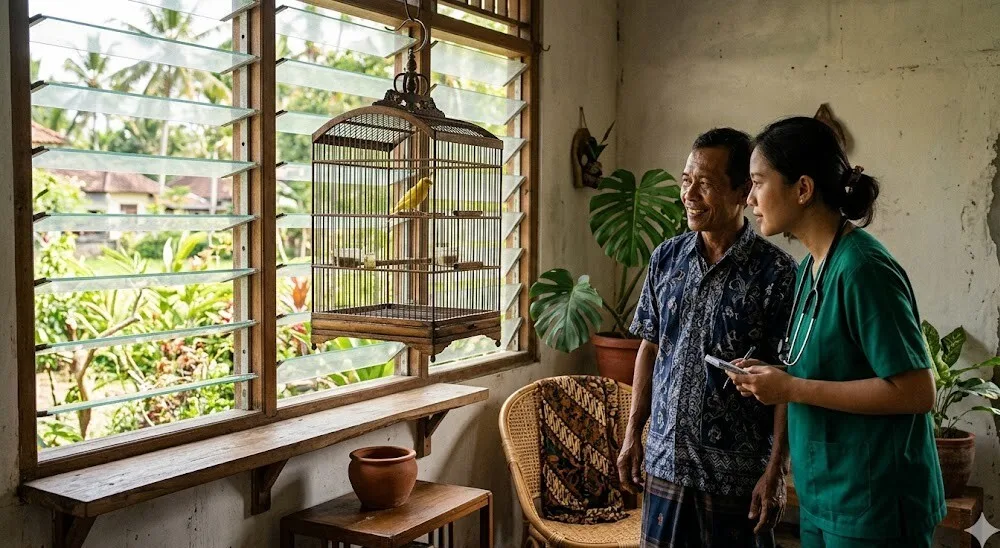
A Canary That Stops Singing: When It Is Medical, Not Just Moulting
A canary that stops singing is not always moulting. Learn when the silence is a natural phase and when it signals a health problem that needs a vet. Free WhatsApp consultation.
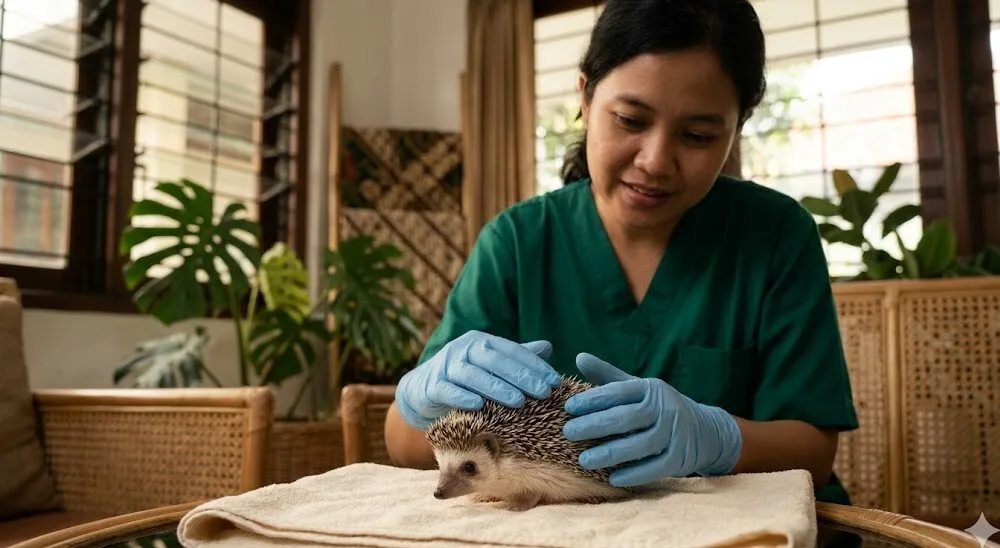
Hedgehog Refusing Food or Bloating: When to See a Vet
Hedgehog refusing to eat or its belly looks bloated? Learn the warning signs, how it differs from a hibernation attempt, and when to see an exotic vet. Free WhatsApp consultation.
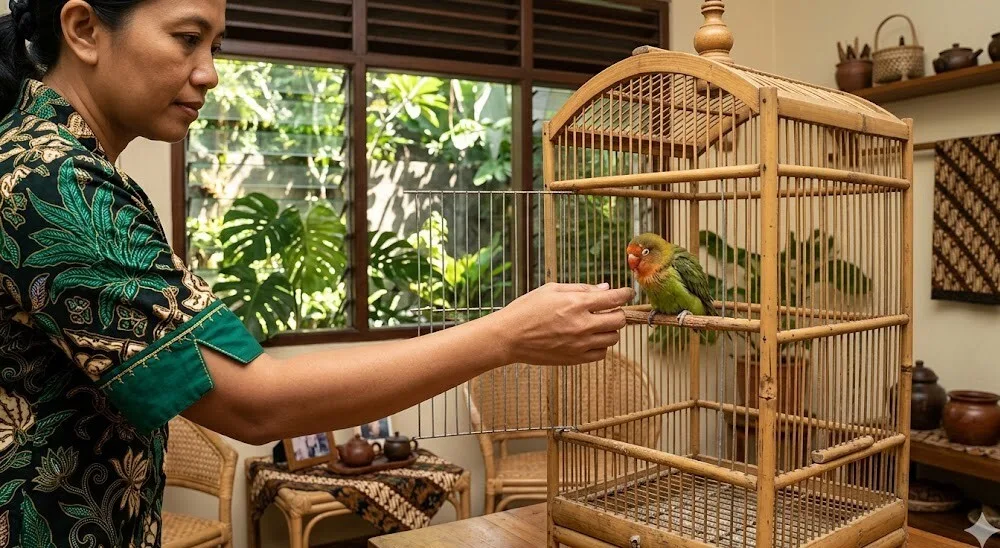
A Sick or Crashing Lovebird: Signs You Must Not Ignore
A crashing lovebird is often noticed too late because birds hide illness so well. Learn the early signs and when to see a vet right away. Free WhatsApp consultation.