Key Takeaways
A serama that is weak, lethargic, or won't stand? Understand the possible causes, danger signs, and safe steps before it worsens. Free WhatsApp consultation.
A Lethargic Serama That Won't Stand: Reading the Signs
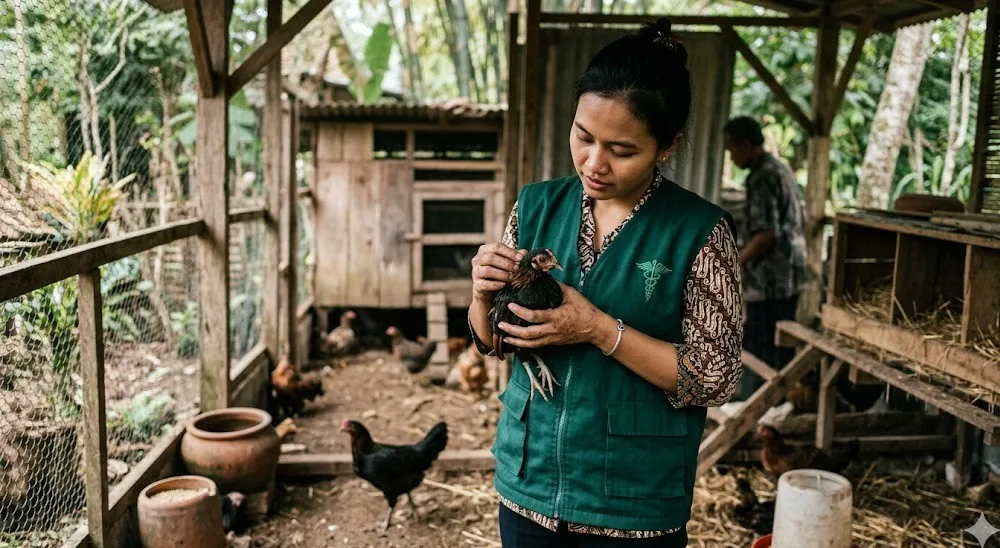
The serama is an expressive chicken. When healthy, it stands tall with its chest raised and head held high in full confidence, exactly the posture that makes it loved in the contest arena. So when a serama suddenly goes quiet, hunches down, and refuses to stand, the change feels immediately striking to its owner. From my experience handling serama and other show chickens in Jabodetabek, the complaint of "weak and won't stand" almost always needs careful reading, because it can be the endpoint of many things.
Weakness Is Not a Diagnosis, But an Entry Point
Don't Wait Until It's Too Late!
I always explain to owners that weakness is a symptom, not a disease. The serama's small body means limited energy reserves, so when something is wrong, it shows lethargy faster than larger chickens. Some possibilities I usually consider include digestive problems, dehydration, low intake from not eating, cold, down to deeper conditions only readable through examination.
So when someone asks "my serama is weak, what medicine should I give?", my honest answer is usually not a medicine name, but a few questions in return. Since when? Still eating and drinking? What do the droppings look like? Are any other chickens sick too? What was the coop temperature last night? The answers to these often determine direction more than the weakness itself.
Signs That Make Me Recommend an Immediate Examination
There are some conditions I believe should not be taken lightly. If a serama refuses food and water entirely within hours, its droppings are very loose or change colour dramatically, its breathing is noisy, its eyes are half closed, or it collapses and cannot support its body, those are signals the condition is fairly serious. In a chicken as small as a serama, decline can happen faster, so the time window is not as wide as in larger chickens.
Dehydration often quietly worsens things. A chicken that stops drinking can decline quickly even if the initial cause was mild. That is why I always ask about water intake from the start.
Why I Do Not Rush to Give Medicine
I understand the urge to act immediately when you see a beloved chicken slumped. But giving shop medicine or antibiotics without knowing the cause is often risky. If the weakness is from dehydration or cold, what is needed is not medicine. If the cause is infection or a digestive problem, the wrong medicine can mask symptoms and complicate the next examination.
What I recommend first is safe, non-risky things: warming, maintaining fluid intake, and monitoring. As for specific therapy, let it be decided after the condition is examined.
Ask the vet by your chicken type
Pick your chicken and the chat opens pre-filled so our team knows exactly which type it is.
Safe Steps Tonight
While considering an examination, there are some things you can safely do. Move the serama to a warm, quiet place not exposed to direct draughts. Make sure clean drinking water is always within reach. If it still eats, offer the food it usually likes. Separate it from other chickens if you suspect something contagious. And record its progress, because changes within a few hours are often important clues.
If the serama stays weak, refuses food and water, or its condition declines, do not wait too long. You can tell me first over WhatsApp what you observe, and we weigh together whether a visit to your coop is needed.
Tell Me First, Free of Charge
If your serama looks weak or won't stand, contact me over WhatsApp. Describe the symptoms, the initial consultation is free, and we decide the right step together.
See also Show Chicken Vet Home Visit Jabodetabek and Chicken Snoring and Noisy Breathing.
Frequently Asked Questions
My serama is weak, what medicine should I give?
Why does a serama weaken faster than larger chickens?
Does it need to be separated from other chickens?
Can I give vitamins or tonics myself?
When should it be examined immediately?
Medically Reviewed by
Birawa Vet Medical Team
This article has been verified by our medical team to ensure veterinary information accuracy.
The information in this article is for general educational purposes only and is not a substitute for direct consultation with a veterinarian.
Every pet has unique conditions. Do not hesitate to seek professional help if your pet is sick.
Share Article
Read Next
View All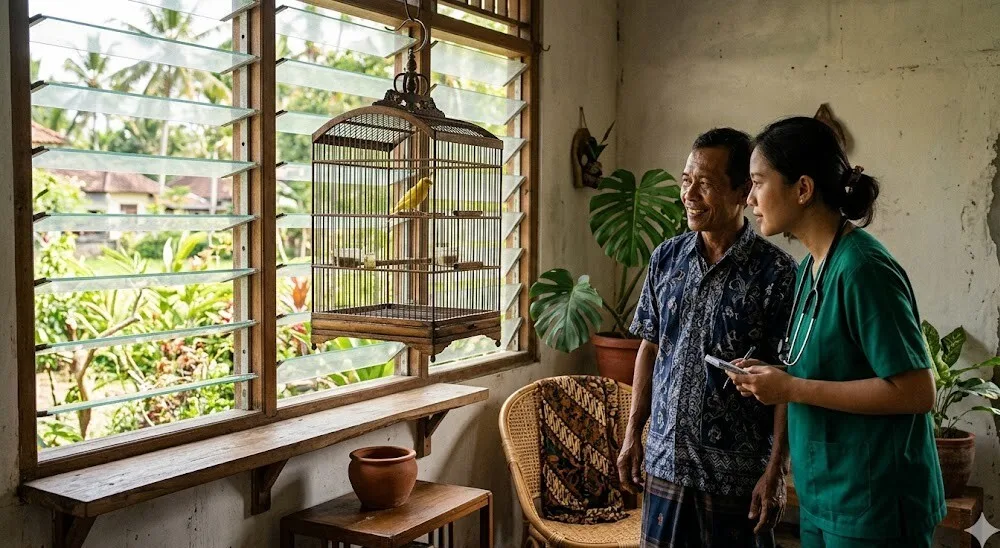
A Canary That Stops Singing: When It Is Medical, Not Just Moulting
A canary that stops singing is not always moulting. Learn when the silence is a natural phase and when it signals a health problem that needs a vet. Free WhatsApp consultation.
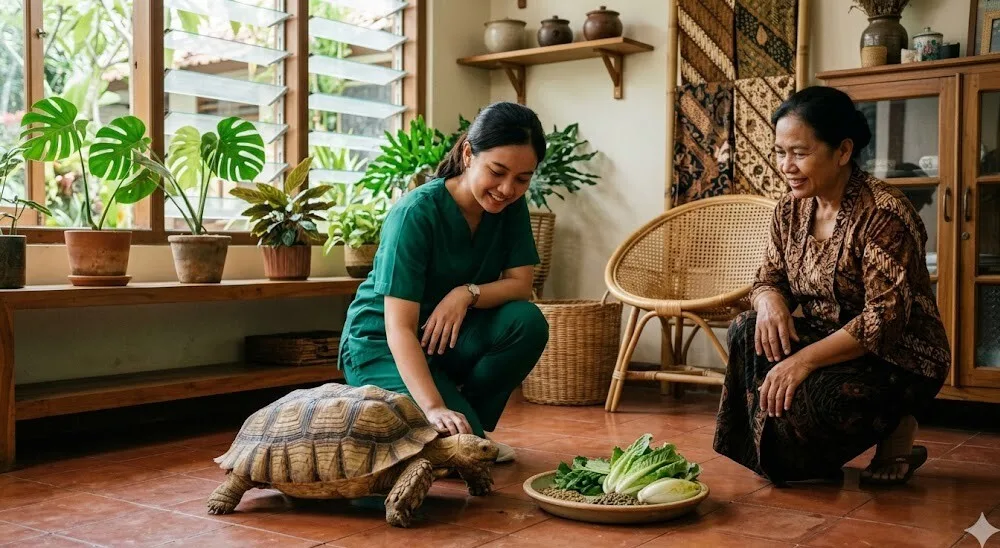
Sulcata Tortoise Won't Eat: Causes and When to See a Vet
Your sulcata on a food strike? Often it is not about taste but temperature, light, and enclosure care. Learn the causes and when to see an exotic vet. Free WhatsApp consultation.
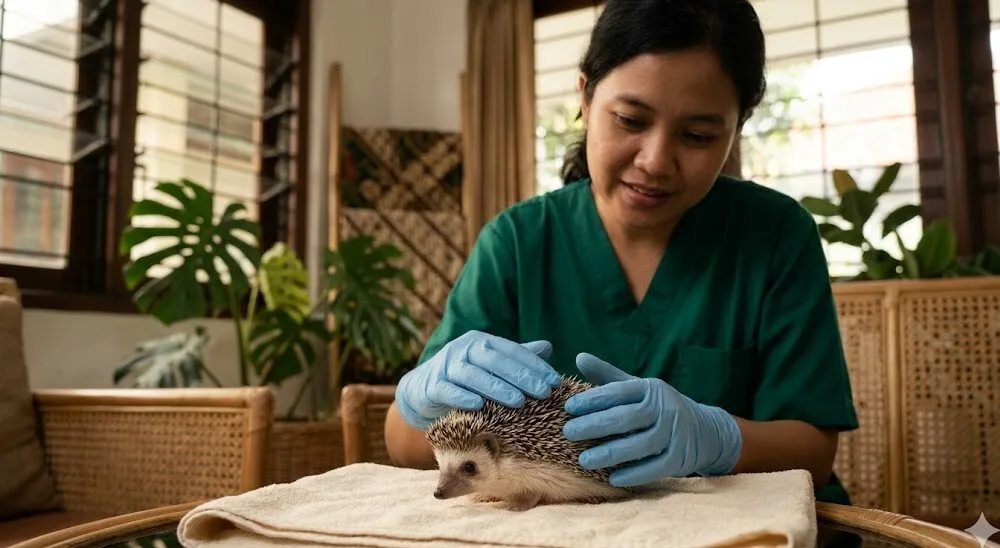
Hedgehog Refusing Food or Bloating: When to See a Vet
Hedgehog refusing to eat or its belly looks bloated? Learn the warning signs, how it differs from a hibernation attempt, and when to see an exotic vet. Free WhatsApp consultation.