Key Takeaways
Is your dog destroying the sofa or your cat urinating outside the box while you're at work? Those are signs of Separation Anxiety. Free WhatsApp consultation.
Back to the Office? Beware — Your Pet May Be Having a Mental Breakdown (Separation Anxiety)

For residents of South Jakarta who have returned to a full WFO (Work From Office) schedule or are frequently away on business trips, there is one serious problem that often goes unnoticed: your pet's mental health at home.
You may have arrived home after a long commute from the SCBD area, exhausted from the traffic, only to find a scene of devastation:
- Your sofa torn to shreds, foam spilling out.
- Your apartment door covered in claw marks.
- Neighbours complaining that your dog has been howling all day.
- Your cat suddenly urinating on the bed or your expensive shoes.
Do not rush to scold your pet or label them "naughty" or "vengeful."
In all likelihood, your pet is suffering from Separation Anxiety — a genuine panic response, not a character flaw.
What Is Separation Anxiety? (The "Pandemic Pet" Syndrome)
Don't Wait Until It's Too Late!
This is not simply "missing you." It is a medical panic state.
Many pets (especially those adopted during the pandemic/WFH era) are accustomed to human company 24 hours a day. To them, you are their sole source of security. When the routine changes drastically and they are left alone in a silent apartment for 8–10 hours, their brain triggers a fight-or-flight response.
They are not destroying things out of anger at you. They are destroying things because they are terrified and trying to escape to find you. This animal psychology is frequently misread as ordinary bad behaviour.
Initial Assessment: "Bored" or "Anxious"?
Owners often confuse a bored dog with an anxious one. Here is the general difference:
| Behaviour | Boredom | Separation Anxiety |
|---|---|---|
| When It Happens | Random. Can happen while you are home (e.g., you are busy on your phone). | Only when you are away or preparing to leave. |
| Destruction Pattern | Chewing table legs slowly, rummaging through bins (seeking food or toys). | Destroying doors, windows, or exit points. Damage is often accompanied by frantic scratching. |
| Physical Signs | Relaxed — may sleep after the destruction. | Panting, excessive drooling (hypersalivation), trembling, dilated pupils. |
5 "Silent Distress" Signs to Watch For
- Destructive Behaviour: Specifically targets exit points or items that carry your scent (pillows, worn clothing, the TV remote).
- Extreme Vocalisation: Howling or crying in a high-pitched, distressed tone immediately after the door closes.
- Inappropriate Elimination: Important Medical Note: If your cat or dog suddenly starts eliminating outside the litter box or designated area, do not automatically assume it is behavioural. Take your pet to a vet for a urine check first. It is often a sign of a urinary tract infection (UTI) or bladder stones (FLUTD) worsened by stress.
- Shadowing: Your pet will not leave your side when you are home. It follows you to the bathroom, the kitchen — as if afraid you will disappear the moment it loses sight of you.
- Anorexia: The appealing food you left that morning is untouched when you return in the evening. They are too anxious to swallow.
Fatal Owner Mistakes (Stop Doing These!)
Scolding your pet when you arrive home only heightens their anxiety. They have no concept of "punishment for what happened this morning." They simply learn: "Owner comes home = anger = I am even more afraid of being left alone."
Hugging, kissing, and saying "Don't be sad, Mummy's just going to work, I'll bring you a toy when I get back" in a sorrowful tone validates their fear and signals that your departure is a major event.
Birawa Vet's Vet-Approved Solution Protocol
Overcoming separation anxiety requires patience and consistent behavioural therapy. There is no "magic pill," but there is a protocol that works:
-
Desensitisation Training for Trigger Cues
Pets are highly skilled at reading patterns. They know your sequence: Pick up keys → Put on shoes → Pick up bag = DISASTER. Exercise: on a day off, pick up your car keys... then sit back down and watch TV. Put on your shoes... then go to the kitchen to cook. Pick up your bag... then put it back down. Goal: Make these "scary" objects feel neutral.
-
The "Low-Key Departure" Concept
When leaving, ignore your pet for 15 minutes before you go. No eye contact, no talking. Simply walk out as if you are just taking out the rubbish. When you return, do not greet them immediately. Wait until they have calmed down, then call them over and offer a stroke.
-
Counter-Conditioning (Turn "Scary" into "Fun")
Give them a puzzle toy (such as a Kong filled with frozen wet food) or a lick mat only when you are about to leave. Their brain will shift: "Oh, when my owner leaves, I get this amazing treat."
-
Medical & Environmental Aids
- Pheromone Diffuser: Use products such as Feliway (for cats) or Adaptil (for dogs).
- Thundershirt: A specially fitted pressure wrap that provides gentle, calming compression.
- Pet Camera (CCTV): To monitor the severity of panic episodes.
5. When to See a Vet
If your pet has reached the point of self-injury (broken nails from scratching the door, bleeding gums from biting metal bars) or is experiencing bloody diarrhoea due to stress (stress colitis), behavioural training alone is no longer sufficient.
Birawa Vet vets can prescribe pet-specific anti-anxiety medication when it is genuinely needed, with the type and dose monitored by the vet.
STRONG WARNING: Never administer human sedatives or anti-anxiety medication to your pet without a vet's prescription. Human doses can be toxic or fatal for animals.
Need Professional Help?
Managing a pet's mental health challenges can be exhausting (caregiver burnout is real). You do not have to face it alone. Discuss your pet's behaviour with the Birawa Vet team. We can make a home visit to assess your pet's environment and design an appropriate behavioural therapy programme.
Pet Behaviour & Stress ConsultationMedically Reviewed by
Birawa Vet Medical Team
This article has been verified by our medical team to ensure veterinary information accuracy.
The information in this article is for general educational purposes only and is not a substitute for direct consultation with a veterinarian.
Every pet has unique conditions. Do not hesitate to seek professional help if your pet is sick.
Share Article
Read Next
View All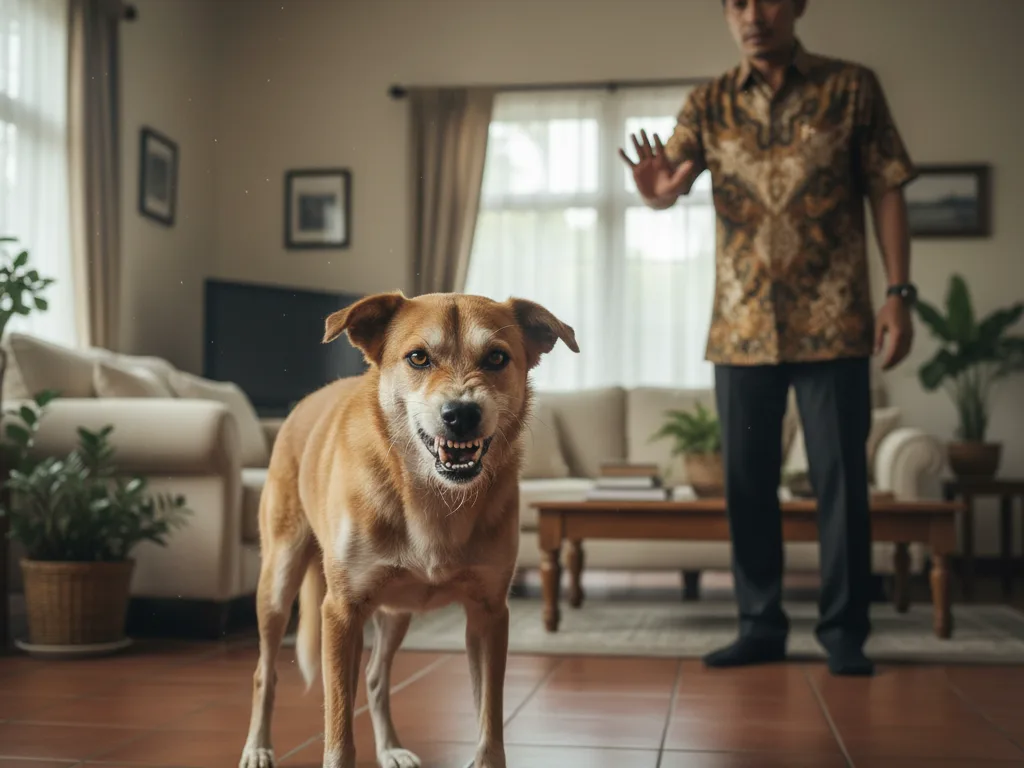
Dog Biting People: Causes, Dangers, and How to Handle It
Is your dog suddenly aggressive and biting people? Understand the causes of aggression in dogs, when it's dangerous and requires a. Free WhatsApp consultation.
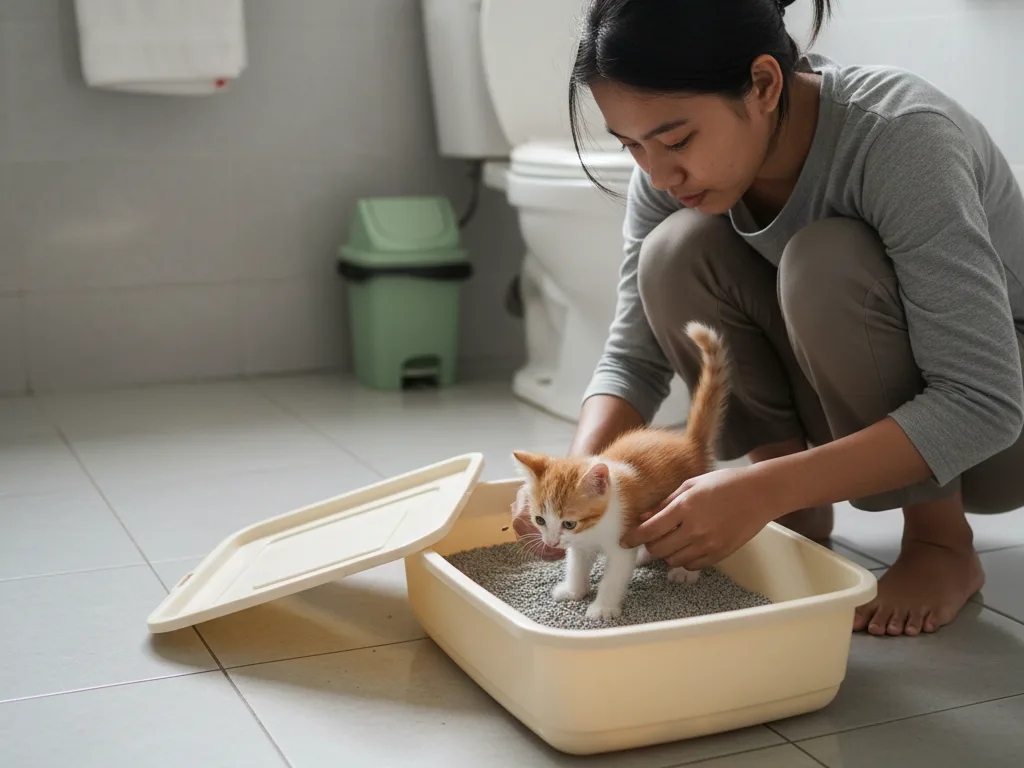
How to Train a Cat to Use the Litter Box: Foolproof Guide from Kitten to Adult
Cat refusing the litter box or going to the bathroom outside it? Complete guide to training a cat to use the litter box correctly. Free WhatsApp consultation.
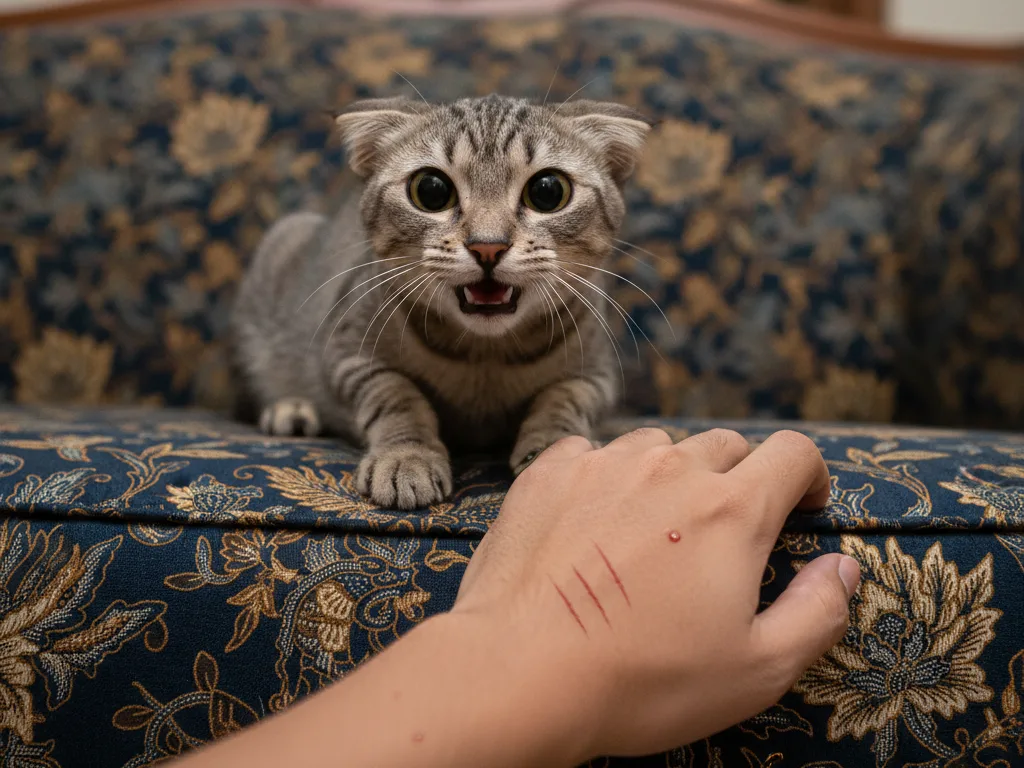
Cat Aggressive, Biting & Scratching: Causes & Solutions
A cat that suddenly bites or scratches for no apparent reason is often misunderstood as "misbehaving." But behind aggression lies a. Free WhatsApp consultation.