Key Takeaways
Your cat refusing to eat after a spay/neuter surgery? Learn the normal time window, when to start worrying, and how to stimulate. Free WhatsApp consultation.
Cat Not Eating After Spay/Neuter: Normal or Dangerous?
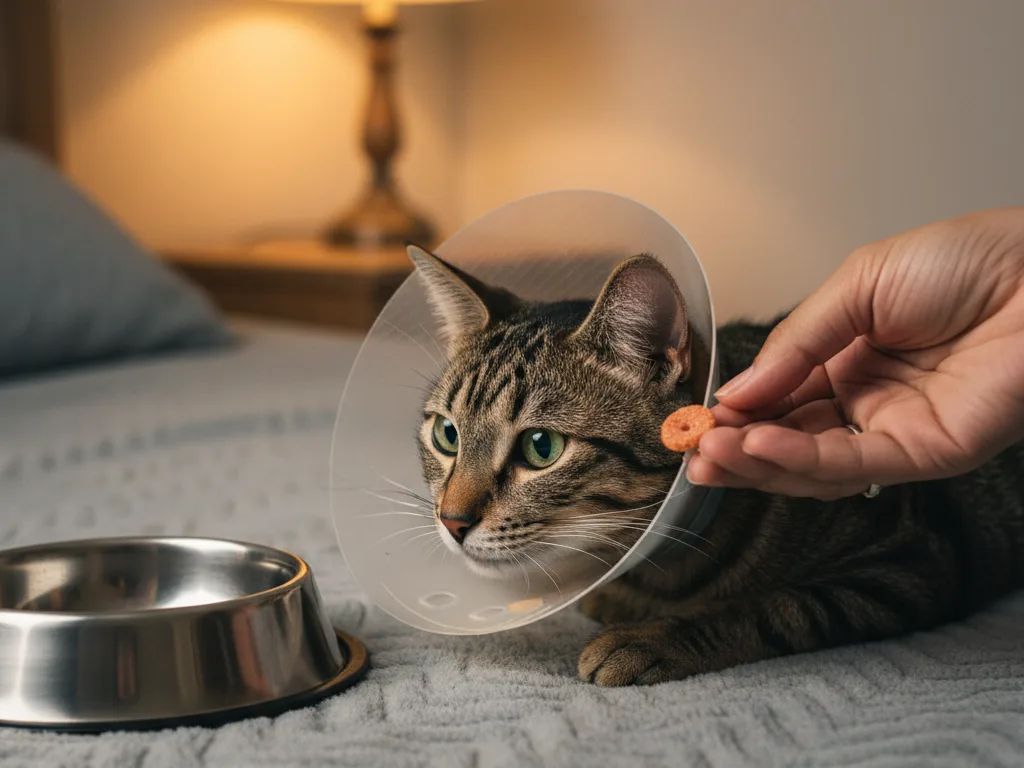
Back from the vet after a spay/neuter surgery, and your pet immediately goes on a hunger strike. This is one of the most common concerns among pet owners after a sterilisation procedure. The question is: when is this still normal, and when should you start to worry?
The answer isn't black and white. There's a time window, associated symptoms to watch for, and the right ways to help your pet start eating again.
Why Won't a Cat Eat After Being Spayed/Neutered?
Don't Wait Until It's Too Late!
There are several different causes — it's important to understand which one applies to your pet:
1. Residual Anaesthetic Effect (Most Common)
Anaesthesia suppresses the central nervous system and causes nausea. This effect usually wears off within 12–24 hours, but can persist up to 48 hours in some cats. Your cat will appear lethargic, unresponsive, and completely uninterested in food.
2. Stress & Disorientation
Cats are highly sensitive to environmental changes. The smell of the clinic, contact with unfamiliar animals, and the surgical experience itself can cause stress that suppresses appetite. This usually resolves once your cat feels safe and comfortable at home again.
3. Mild Post-Operative Pain
It's natural for the surgical site to feel uncomfortable. Pain that is well-managed (via pain medication from your vet) shouldn't cause your cat to refuse food for more than 1–2 days. If pain appears severe, consult your vet about adjusting the dosage.
4. Complications (Requires Veterinary Attention)
If not eating is accompanied by repeated vomiting, a festering wound, fever, or extreme lethargy — there may be a more serious issue such as infection or a drug reaction. This is not a normal anaesthetic effect and requires immediate veterinary evaluation.
Timeline Guide: Normal vs. See a Vet
| Time After Surgery | Status | Action |
|---|---|---|
| 0–6 hours | Normal | No need to offer food. Let your cat rest. |
| 6–24 hours | Normal | Offer water first. If accepted, try a small amount of warm wet food. |
| 24–48 hours | Monitor | Still could be normal. Try various favourite foods. Watch closely. |
| More than 48 hours | Not Normal | Contact your vet. Evaluation may be needed, possibly a feeding tube or syringe feeding. |
How to Stimulate Your Cat's Appetite After Surgery
Warm Up Wet Food
Microwave canned food for 10 seconds and stir well. The aroma of warm food is much stronger and more enticing. Make sure it's not too hot before serving.
Use Their Favourite Food
This is not the time to switch brands. Use whatever your cat loves most, even if it's not the healthiest option for everyday feeding.
Hand-Feed
Some stressed cats will eat from their owner's hand even when refusing a bowl. Try dabbing a small amount of food on your fingertip and bringing it close to their nose.
Add Broth
Add a little plain, salt-free, onion-free chicken broth to their food. This enhances the aroma and creates a softer, easier-to-eat texture. It can also be offered as a drink.
Create a Calm Environment
Place the bowl in a quiet spot away from noise and activity. Don't force or crowd your cat. A stressed cat needs peace and quiet before they'll start to eat.
Fortasyn or Mirtazapine
If your cat absolutely won't eat after 48 hours, a vet can prescribe an appetite stimulant such as mirtazapine (available as an ear-applied cream). Never give this without a prescription.
What NOT to Do
- Don't force-feed with a syringe without veterinary guidance — risk of aspiration (food entering the lungs)
- Don't give human stomach medicines or vitamins such as antacids, B12 tablets, etc. — some are toxic to cats
- Don't add seasoning or soy sauce to food to make it more appealing — this can cause poisoning
- Don't wait too long if there are other symptoms beyond loss of appetite — the sooner you see a vet, the better
Worried About Your Pet's Recovery After Surgery?
Birawa Vet offers home visit services for post-spay/neuter evaluations — no need to bring your still-recovering pet to a clinic. Our vet will check the wound, ensure recovery is on track, and prescribe additional medication if needed.
View Our Post-Spay/Neuter Home Care Service
Frequently Asked Questions
How long is it normal for a cat not to eat after being spayed/neutered?
What should I do if my cat won't eat after being spayed/neutered?
Does a cat that won't eat after surgery need an IV drip?
Why is my cat vomiting after being spayed/neutered?
Can I give my cat vitamins or supplements after surgery?
Medically Reviewed by
Birawa Vet Medical Team
This article has been verified by our medical team to ensure veterinary information accuracy.
The information in this article is for general educational purposes only and is not a substitute for direct consultation with a veterinarian.
Every pet has unique conditions. Do not hesitate to seek professional help if your pet is sick.
Share Article
Steril Promo This Month!
Sterilization procedure per WSAVA Spay-Neuter standard (inhalation/injectable anesthesia per patient condition, vital sign monitoring) at special price. Consult first before procedure.
Read Next
View All
A Canary That Stops Singing: When It Is Medical, Not Just Moulting
A canary that stops singing is not always moulting. Learn when the silence is a natural phase and when it signals a health problem that needs a vet. Free WhatsApp consultation.

Sulcata Tortoise Won't Eat: Causes and When to See a Vet
Your sulcata on a food strike? Often it is not about taste but temperature, light, and enclosure care. Learn the causes and when to see an exotic vet. Free WhatsApp consultation.
Hedgehog Refusing Food or Bloating: When to See a Vet
Hedgehog refusing to eat or its belly looks bloated? Learn the warning signs, how it differs from a hibernation attempt, and when to see an exotic vet. Free WhatsApp consultation.