Key Takeaways
A healthy cat poops 1–2 times a day. Past 48 hours without a bowel movement = constipation — risks megacolon if ignored. Free WhatsApp consult.
Cat Cannot Defecate (Constipation): Causes, Warning Signs, and How to Help
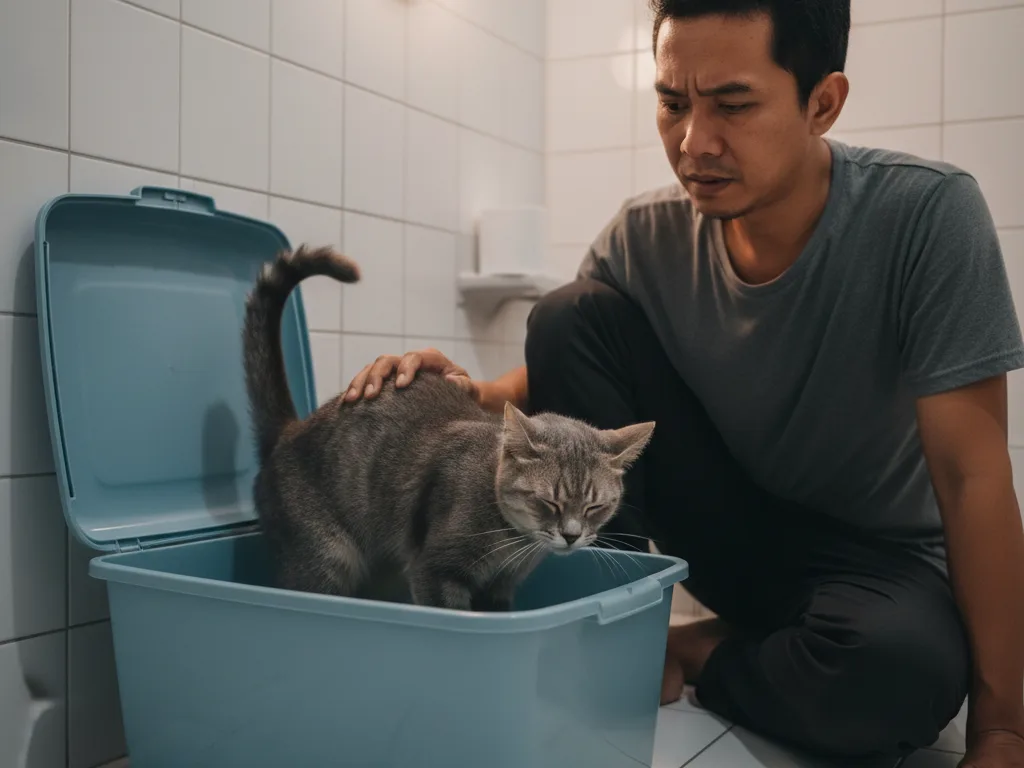
Your cat not pooping for one day may not be alarming yet. But if two days pass, the abdomen feels hard, and your cat looks uncomfortable — this is not something to "wait and see" on.
Cat constipation is more common than many owners realise, and it can escalate from "uncomfortable" to a genuine emergency in a matter of days — especially if it progresses to obstipation or megacolon. This article covers the safe timeline, main causes, first-aid you can try at home, and when you must call a vet.
In short (TL;DR)
A healthy cat poops 1–2x daily. 24–48 hours with no stool = monitor + add water. 48–72 hours = constipation, consult a vet. Over 72 hours + vomiting/lethargy/hard belly = emergency, do not delay. Never give human laxatives.
How Long Without a Bowel Movement Is Normal?
Don't Wait Until It's Too Late!
A healthy adult cat should defecate 1–2 times a day with formed, moist stool that comes out without hard straining. If the pattern suddenly changes, use this timeline as your guide for when to relax and when to act:
0–24 hours — Still normal
Normal variation. If your cat is still eating, drinking, playing, and there is yesterday's stool in the litter box, no need to panic. But start watching water intake and box hygiene.
24–48 hours — Start monitoring
Add wet food, place water in multiple spots, brush long-haired cats, ensure the box is clean. Note when the last stool was. If the next 24 hours yield nothing, escalate.
48–72 hours — Constipation confirmed
Contact a vet for consultation. If there are added symptoms (straining, distended belly, one episode of vomiting), don't wait — book an examination.
72+ hours — Emergency
Risk of complete obstipation and toxin reabsorption from retained stool. The cat is usually dehydrated, lethargic, and needs medical intervention (IV fluids, enema, sedation). Do not delay.
Note for kittens: the timeline is tighter. 24 hours without a bowel movement is already reason to consult, since their fluid and electrolyte reserves are smaller.
Often-Missed Signs of Cat Constipation
Cats are skilled at hiding pain. Many owners only realise after 3 days because the early signs are subtle. Watch for these:
Mild Signs (monitor 24 hours)
- Going in and out of the litter box repeatedly without producing stool
- Mild straining, sometimes meowing in the box
- Stool small, hard like pebbles, dry when it does pass
- Slight drop in appetite (10–20%)
- More licking around the abdomen or rear end
Warning Signs (see a vet immediately)
- More than 48–72 hours with no bowel movement at all
- Repeated vomiting (especially yellow/green fluid)
- Hard, distended abdomen, or the cat refuses belly handling
- Lethargy, hiding in corners, refusal to move
- Hard straining with obvious pain (sharp meows in the box)
- Mucus or blood from the rectum without stool
- Refusing food and water for 24 hours
Causes: Diet, Dehydration, Hairballs, Megacolon
Constipation rarely has a single cause. It is usually a combination of 2–3 factors below. Identify which apply to your cat:
1. Dehydration (Cause #1)
Cats on dry-food-only diets that drink rarely are very vulnerable. The intestine compensates by absorbing too much water, leaving stool pebble-hard. This is also the most common trigger of chronic constipation and megacolon in older cats.
2. Hairballs (Ingested Fur)
Cats swallow fur during grooming. In long-haired breeds (Persian, Maine Coon, Angora) or cats not brushed regularly, fur build-up slows stool transit. Hairballs + dehydration is the recipe we see most often in indoor-cat clients.
3. Dirty or Disliked Litter Box
Cats are very sensitive. A dirty box, strong-scented new litter, or a box placed in a busy area can make a cat hold stools for days. Practical rule: 1 litter box per cat + 1 spare, scooped 1–2x daily.
4. Stress and Environmental Change
Moving house, a new cat/dog, renovation, or even house guests can disrupt intestinal motility. Stress-related constipation often appears alongside behaviour changes (reduced appetite, hiding, marking).
5. Megacolon
A chronic condition where the colon muscles lose contractility. May be idiopathic or follow repeated untreated constipation. Common in senior cats. Requires lifelong management — special diet, lactulose, sometimes cisapride. Severe cases may need subtotal colectomy surgery.
6. Foreign-Body Obstruction
Swallowed string, rubber bands, small toys, chicken bones, or plastic can block the intestine. This is more urgent than ordinary constipation — often needs an X-ray and prompt intervention.
7. Systemic Disease or Medication Side Effects
Chronic kidney disease (very common in senior cats) causes chronic dehydration and constipation. Hypothyroidism is rare but possible. Post-op opioids, certain antihistamines, and some antacids slow intestinal motility.
First Aid at Home (Water, Pumpkin, Movement)
If your cat is in the 24–48 hour zone, still eating, drinking, and active — you may try at-home steps. But if there is no improvement within 24 hours, consult a vet right away.
Things You Can Do at Home
- Aggressive water boosting — make wet food 50–70% of the diet, add 1–2 teaspoons warm water to dry kibble, place water in 3+ spots, consider a cat water fountain (cats prefer running water).
- Pumpkin — 1–2 teaspoons of plain cooked pumpkin puree (not pumpkin pie filling) mixed into food. The natural fibre helps motility. Safe for 2–3 consecutive days.
- Hairball paste — products like Petromalt or Lax-Aid are available at pet shops. Follow package dosing, usually a pea-sized amount.
- Olive oil — 0.5 teaspoon mixed into food, only for 1–2 days. Not a long-term solution; do not use if obstruction is suspected.
- Movement stimulation — play with feather wand or laser pointer 10–15 minutes, twice a day. Exercise supports intestinal motility.
- Litter box reset — full clean, fresh litter, place it in a quiet private spot.
- Belly stimulation (kittens only) — for kittens unable to defecate alone, gently rub the lower belly and anal area with a warm damp cotton pad, mimicking the mother's licking.
DO NOT
- Do not give human laxatives — Dulcolax, Microlax, fleet enema (sodium phosphate-based) can be fatal to cats.
- Do not buy lactulose, cisapride, or MiraLAX on your own without a prescription — dosing depends on body weight and condition.
- Do not perform a home enema — risk of rectal trauma, perforation, and toxicity.
- Do not force-feed water by syringe in large volumes — aspiration risk.
- Do not press or massage the belly hard — if there is impacted stool, pressure can damage the intestinal wall.
When to See a Vet — Warning Signals
Not every constipation can be managed at home. The following situations require a vet visit or home call within 24 hours:
- More than 48 hours with no bowel movement at all
- Repeated vomiting — especially fluid, yellow, or smelling of stool
- Hard, distended abdomen, or the cat yowls when handled
- Refusing both food and water for the past 24 hours
- Lethargy, hypothermia (cold nose and paw pads), pale gums
- Hard straining with no result, especially with blood or mucus
- History of megacolon or chronic constipation
- Kittens under 6 months with 24+ hour constipation
- Senior cats (>10 years) with kidney disease history
For owners in South Jakarta and surrounding areas, a home-visit vet is often ideal for constipation cases because the exam needs calm abdominal palpation — a cat forced to a clinic is usually stressed and tense, making the exam inaccurate. For first-time issues, an in-home medical checkup is a good way to screen for kidney and thyroid problems at the same time.
Unsure When to See a Vet?
Free WhatsApp consultation with the Birawa Vet team — share your cat's timeline (last bowel movement, symptoms), and we'll help assess whether home monitoring is enough or an in-person exam is needed.
Free WhatsApp ConsultMedical Treatment (Lactulose, Cisapride, Enema)
Once a vet confirms constipation (often via palpation + abdominal X-ray), treatment depends on severity:
| Severity | Typical Action | Setting |
|---|---|---|
| Mild (<48h) | Subcutaneous fluids, oral lactulose, diet education, pumpkin/fibre. Same-day discharge. | Home visit / outpatient |
| Moderate (48–72h) | IV fluids, lactulose + cisapride (prokinetic), sometimes a low-volume enema with mild sedation. | Outpatient / short hospitalisation |
| Severe / Obstipation (>72h) | Sedation or general anaesthesia, staged enemas, sometimes manual deobstipation. Hospitalised 1–3 days, electrolyte monitoring. | Referral clinic |
| Chronic megacolon | Long-term management: high-fibre prescription diet, daily lactulose, cisapride. Subtotal colectomy in refractory cases. | Referral clinic + regular follow-up |
After a constipation episode, we usually recommend baseline blood work (urea, creatinine, T4) to screen for underlying kidney or thyroid disease. This is often missed and is why some cats return 3 months later with the same issue.
Preventing Cat Constipation
Once a cat has had constipation, recurrence risk goes up. Long-term prevention focuses on 5 areas:
- Mostly wet diet — at least 50% of intake from wet food. For megacolon or senior cats, prescription high-fibre diets like Royal Canin Fibre Response or Hill's w/d are commonly recommended. See also the cat food selection guide for balanced composition.
- Active hydration — water fountain, multiple bowls around the home, plain chicken broth (no salt or onion) for variety.
- Routine grooming — brush 2–3x weekly (daily for Persians/Maine Coons), hairball paste 1–2x weekly as maintenance.
- Litter box hygiene — minimum 1 box per cat + 1 spare, scoop 1–2x daily, full change weekly, avoid heavily-scented litter.
- Activity + checkups — play 10–15 minutes 2x daily, and a routine medical checkup every 6–12 months for cats over 7 to catch kidney/thyroid issues early.
Cat Past 48 Hours With No Bowel Movement?
Book a Birawa Vet home visit — a doctor comes to your home for a physical exam, abdominal palpation, dehydration assessment, and subcutaneous/IV fluids if needed. If an enema or X-ray is required, we refer to the nearest clinic. Coverage across South Jakarta and surroundings.
Book a Home VisitThis article is educational, drawn from clinical experience and references such as the Merck Veterinary Manual — Constipation, Obstipation, and Megacolon in Small Animals and WSAVA Global Nutrition Guidelines. For diagnosis and treatment, consult a vet directly. Drug doses (lactulose, cisapride) should only be given by prescription after a physical exam.
Frequently Asked Questions
How long is it normal for a cat not to defecate?
What are the most common causes of cat constipation?
Can I give olive oil or coconut oil to a constipated cat?
What is the difference between constipation, obstipation, and megacolon in cats?
How can I prevent constipation in cats?
When should I call a vet to come home for cat constipation?
Medically Reviewed by
Birawa Vet Medical Team
This article has been verified by our medical team to ensure veterinary information accuracy.
The information in this article is for general educational purposes only and is not a substitute for direct consultation with a veterinarian.
Every pet has unique conditions. Do not hesitate to seek professional help if your pet is sick.
Share Article
Senior Pets Need Special Care
Not sure if your pet's symptoms are normal or urgent? Tell our vet — we help evaluate without requiring immediate booking.
Read Next
View All
A Canary That Stops Singing: When It Is Medical, Not Just Moulting
A canary that stops singing is not always moulting. Learn when the silence is a natural phase and when it signals a health problem that needs a vet. Free WhatsApp consultation.

Sulcata Tortoise Won't Eat: Causes and When to See a Vet
Your sulcata on a food strike? Often it is not about taste but temperature, light, and enclosure care. Learn the causes and when to see an exotic vet. Free WhatsApp consultation.
Hedgehog Refusing Food or Bloating: When to See a Vet
Hedgehog refusing to eat or its belly looks bloated? Learn the warning signs, how it differs from a hibernation attempt, and when to see an exotic vet. Free WhatsApp consultation.