Key Takeaways
Cats can't tell you when they're anxious. They show it through behavior — hiding constantly, over-grooming, or sudden aggression. Free WhatsApp consultation.
Signs of Stress in Cats, Causes, and How to Help at Home
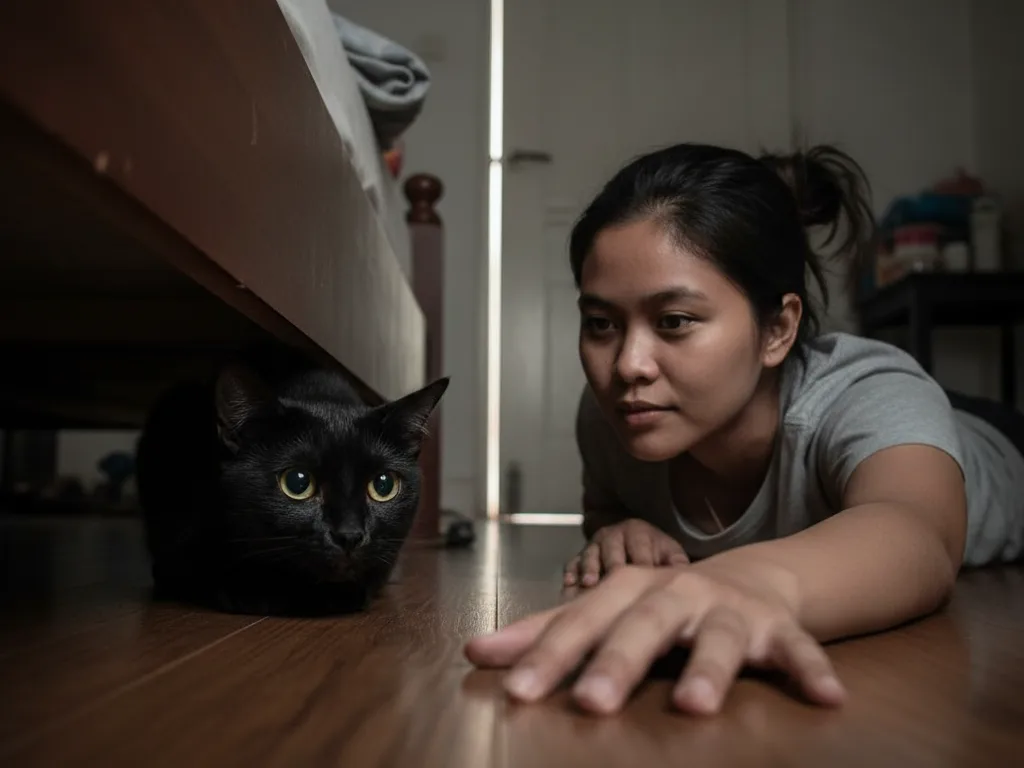
Cats are extremely sensitive to change. Things that seem trivial to us — new furniture, an overnight guest, or a shifted schedule — can be a significant source of stress for them.
A stressed cat doesn't cry out for help. They hide, stop eating, or start licking themselves bald. Recognize the signs before they develop into a health problem.
Signs Your Cat Is Stressed
Don't Wait Until It's Too Late!
Behavioral Changes
- Hiding more than usual — won't come out even to eat
- Eliminating outside the litter box (especially in spots that smell like the owner)
- Over-grooming: licking one area until it's bald
- Won't play, unresponsive to stimulation
- Aggression without obvious provocation — biting or scratching
- Becoming very clingy, or conversely very avoidant
- Excessive vocalization, especially at night
The Most Common Stress Triggers
Physical Environment Changes
Moving house, renovations, new or rearranged furniture, new smells (paint, cleaners, strong fragrances). Cats are highly territorial — changes to a room's "scent map" can be deeply unsettling.
New Household Members
A newborn baby, a new partner, a new pet, or even a long-staying houseguest. Cats need time to accept "strangers" in their territory.
Conflict With Housemate Cats
One of the most common causes of stress that owners don't notice. Cats that "look fine" together can be in quiet conflict — one cat controlling access to resources (food, litter box, sleeping spots).
Lack of Stimulation and Boredom
Indoor cats that don't get enough activity outlets often experience low-grade chronic stress. Their need to hunt, explore, and play goes unmet.
Owner Routine Changes
A shifted feeding schedule, the owner coming home at different times, or starting to work or stop working from home. Cats are very routine-oriented.
How to Help Your Cat Manage Stress
1. Provide Enough Resources, Spread Out
Rule for multi-cat households: litter boxes = number of cats + 1; food and water bowls in different locations; scratching posts in several spots; high perches for each cat. Centralized resources create competition and conflict.
2. Environmental Enrichment
Window access with an outdoor view, a bird feeder outside the window, puzzle feeders instead of regular bowls, rotating toys, cardboard boxes for hiding. Rotate toys every few days to prevent boredom.
3. Regular Play Sessions
At least 2 sessions of 10–15 minutes per day with interactive toys (wand toy, laser pointer). This satisfies the hunting drive while building a bond. Consistency matters more than duration.
4. Feliway Diffuser
Plug it into the room your cat uses most. Feliway Classic for a single stressed cat; Feliway MultiCat for inter-cat tension. Allow 2–4 weeks for optimal effect.
5. Don't Punish Stress Behaviors
House soiling, over-grooming, or stress-induced aggression won't improve with punishment — punishment actually worsens anxiety. Identify and address the cause, not the symptom.
Long-Term Stress Should Be Evaluated by a Vet
If stress symptoms have been going on for weeks, are accompanied by physical issues (FLUTD, repeated diarrhea, weight loss), or you've tried several approaches with no results — it's a good idea to consult a vet. Birawa Vet can come to your home for a thorough evaluation and help build a stress management plan.
Behavior & Health ConsultationFrequently Asked Questions
What are the signs that a cat is stressed?
What most commonly causes stress in cats?
Can stress make a cat sick?
Is Feliway really effective for stressed cats?
How do you introduce a new cat without stressing the existing cat?
Medically Reviewed by
Birawa Vet Medical Team
This article has been verified by our medical team to ensure veterinary information accuracy.
The information in this article is for general educational purposes only and is not a substitute for direct consultation with a veterinarian.
Every pet has unique conditions. Do not hesitate to seek professional help if your pet is sick.
Share Article
Senior Pets Need Special Care
Not sure if your pet's symptoms are normal or urgent? Tell our vet — we help evaluate without requiring immediate booking.
Read Next
View All
Dog Biting People: Causes, Dangers, and How to Handle It
Is your dog suddenly aggressive and biting people? Understand the causes of aggression in dogs, when it's dangerous and requires a. Free WhatsApp consultation.
How to Train a Cat to Use the Litter Box: Foolproof Guide from Kitten to Adult
Cat refusing the litter box or going to the bathroom outside it? Complete guide to training a cat to use the litter box correctly. Free WhatsApp consultation.
Cat Aggressive, Biting & Scratching: Causes & Solutions
A cat that suddenly bites or scratches for no apparent reason is often misunderstood as "misbehaving." But behind aggression lies a. Free WhatsApp consultation.