Key Takeaways
Cat fur everywhere and getting worse? A little shedding is normal, but excessive hair loss can signal fleas, fungal infection. Free WhatsApp consultation.
Excessive Cat Hair Loss: 8 Causes and How to Treat It
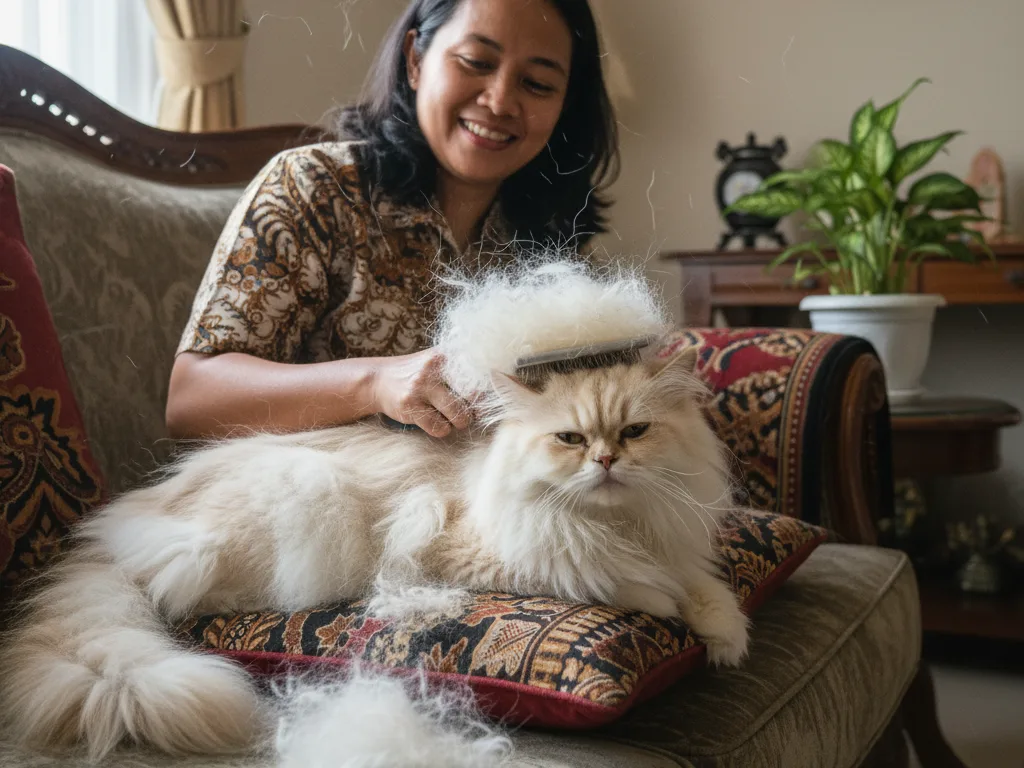
If your cat's coat is looking thinner, patches of bare skin are appearing, or your sofa and clothes are constantly covered in fur — those are signals worth paying attention to. Normal shedding has its limits.
Here are 8 causes of excessive hair loss, and how to tell which ones need veterinary attention.
Normal Shedding vs Problematic Hair Loss
Don't Wait Until It's Too Late!
Normal Shedding
- Even distribution across the whole body
- More pronounced during seasonal changes
- Skin underneath is clean and normal
- Cat is not scratching excessively
- Appetite and activity level are normal
Hair Loss That Needs Checking
- Bald patches / very thin fur in one spot
- Red, scaly, or crusty skin beneath the missing fur
- Cat constantly licking or scratching one area
- Fur breaking off rather than falling from the root
- Accompanied by lethargy, loss of appetite, or weight loss
8 Main Causes of Excessive Hair Loss
Fleas & Mites (Most Common)
Fleas cause extreme itching — cats scratch until fur falls out. Demodex mites cause hair loss without much itching. Both require prescription antiparasitic medication from a vet.
Ringworm (Fungal Dermatophytosis)
Not a worm — this is a fungal infection. Bald patches are circular or irregular in shape, with grey or white scaly skin. Highly contagious to other cats and humans. Requires topical and/or systemic antifungal treatment.
Allergy (Food or Environmental)
Allergies cause chronic itching → the cat licks and scratches constantly → hair falls out and skin becomes raw. Most commonly affected areas: abdomen, forelegs (from over-licking), and neck.
Stress & Psychogenic Over-Grooming
Stressed cats (from moving, a new pet, or a change in routine) sometimes groom compulsively. The result is symmetrical bald patches on the belly or forelegs — hair loss from behaviour, not a skin disease.
Hormonal Disorders (Hypothyroidism / Hyperthyroidism / Cushing's)
Hormonal imbalance disrupts the hair growth cycle. Hypothyroidism (rare in cats) causes symmetrical hair loss and dry skin. Hyperthyroidism in older cats causes a rough, unkempt coat and shedding.
Nutritional Deficiency
Deficiency in omega-3/omega-6 fatty acids, biotin, zinc, or low-quality protein causes dull, brittle fur that sheds excessively. Common in cats fed cheap food or an unbalanced diet.
Pregnancy & Nursing
Nursing queens often lose fur around the belly — this is normal, as kittens stimulate that area. Shedding may be heavier than usual but typically resolves on its own after weaning.
Systemic Disease (Kidney, Liver, FIV/FeLV)
Serious internal organ disease often manifests as poor coat condition. A dull, brittle coat with more-than-usual shedding can be the first sign of undetected internal disease.
Tips for Reducing Normal Shedding at Home
- Regular brushing — 2–3 times per week for short-haired cats, daily for long-haired. Brushing captures dead fur before it lands on the sofa.
- Quality nutrition — Choose food with animal protein as the primary ingredient (not by-products or grains). Omega-3 from fish oil can be added as a supplement.
- Adequate hydration — Cats that drink too little tend to have dry skin and shed more. Wet food helps boost fluid intake.
- Regular bathing — Bathing once or twice a month helps remove dead fur and keep skin healthy. Use a cat-specific shampoo.
- Routine parasite checks — Monthly flea and parasite treatment prevents many cases of parasite-related hair loss.
Excessive Shedding with No Obvious Cause?
A Birawa Vet doctor can come to your home for a thorough skin and coat examination — including parasite identification and skin sampling if needed. An accurate diagnosis means an effective solution.
Book a Home ExaminationFrequently Asked Questions
Is it normal for cats to shed fur?
Can cat hair loss spread to humans?
What supplements help reduce cat hair loss?
My cat is losing fur and scratching constantly — what is the cause?
How often should I brush my cat to reduce shedding?
Medically Reviewed by
Birawa Vet Medical Team
This article has been verified by our medical team to ensure veterinary information accuracy.
The information in this article is for general educational purposes only and is not a substitute for direct consultation with a veterinarian.
Every pet has unique conditions. Do not hesitate to seek professional help if your pet is sick.
Share Article
Read Next
View All
A Canary That Stops Singing: When It Is Medical, Not Just Moulting
A canary that stops singing is not always moulting. Learn when the silence is a natural phase and when it signals a health problem that needs a vet. Free WhatsApp consultation.

Sulcata Tortoise Won't Eat: Causes and When to See a Vet
Your sulcata on a food strike? Often it is not about taste but temperature, light, and enclosure care. Learn the causes and when to see an exotic vet. Free WhatsApp consultation.
Hedgehog Refusing Food or Bloating: When to See a Vet
Hedgehog refusing to eat or its belly looks bloated? Learn the warning signs, how it differs from a hibernation attempt, and when to see an exotic vet. Free WhatsApp consultation.