Key Takeaways
A cat that suddenly drinks a lot of water (polydipsia) almost always has an underlying medical cause. There are 5 common serious. Free WhatsApp consultation.
Cat Drinking Excessively: Diabetes, Kidney, or Thyroid?
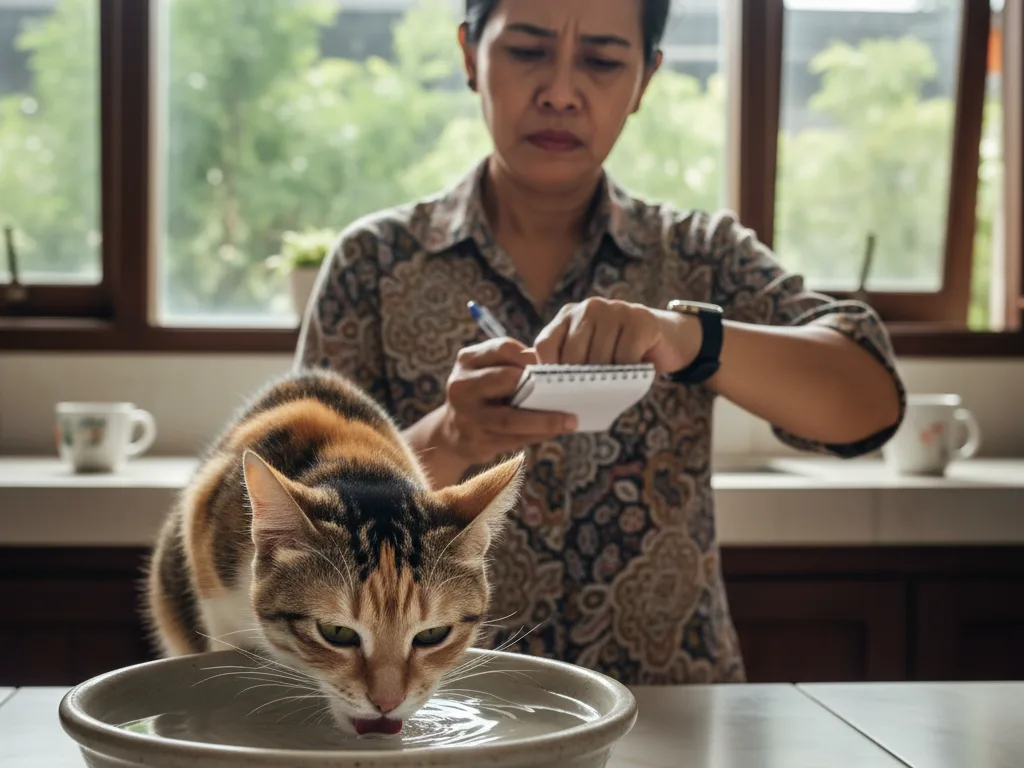
If your cat suddenly keeps going back and forth to the water bowl, or the water disappears much faster than usual — that's not something to ignore. Polydipsia (excessive drinking) in cats almost always points to a medical condition that needs attention.
The good news: nearly all causes can be managed well if caught early.
How to Measure If Your Cat Is Really Drinking Too Much
Don't Wait Until It's Too Late!
Before going to the vet, measure first:
- Fill the water bowl with a known amount in the morning (e.g., 500 ml)
- Make sure no other water source is accessible (toilet, leaky faucet)
- Note how much is left the next morning
- Calculate: water consumed = initial amount − leftover
- Normal: ~50 ml/kg/day. Example for a 4 kg cat: normal = 200 ml. Above 400 ml = needs to be checked.
5 Main Causes of Excessive Drinking in Cats
Chronic Kidney Disease (CKD)
The most common cause of polydipsia in older cats. Damaged kidneys can't concentrate urine → dilute urine in large volumes → cat must drink more to compensate. More than half of cats over 12 years old have some level of CKD.
Diabetes Mellitus
High blood glucose pulls water into the urine via osmosis → sweet, dilute urine → the cat is constantly thirsty. More common in overweight, male, and neutered cats. Often comes with increased appetite but weight loss.
Hyperthyroidism
An overactive thyroid raises metabolism, blood pressure, and renal blood flow → more urine → more thirst. Very common in cats over 10 years old. Often co-occurs with CKD, complicating diagnosis.
Pyometra (Uterine Infection)
Bacteria in a uterine infection produce toxins that interfere with the kidneys' ability to concentrate urine → polydipsia. Usually accompanied by other more obvious symptoms. More common in dogs but can occur in unspayed female cats.
Diabetes Insipidus & Other Conditions
Less common: diabetes insipidus (lack of ADH or kidneys unresponsive to it), hypercalcemia, hypokalemia, liver disease, or side effects of certain medications (corticosteroids). Comprehensive bloodwork can rule these out.
Tests Typically Performed
- Complete blood count (CBC) — checks for infection, anemia, blood cells
- Chemistry panel — BUN, creatinine (kidneys), ALT/AST (liver), glucose, calcium
- T4 — thyroid hormone level (for hyperthyroidism)
- SDMA — kidney marker more sensitive than creatinine
- Urinalysis + urine specific gravity — the kidneys' ability to concentrate urine
- Abdominal ultrasound — condition of the kidneys, uterus, liver
Cat Drinking Excessively? Get It Checked Now
All of the conditions above are easier to manage when caught early. Birawa Vet doctors can come to your home for an exam and blood collection — results are usually back within hours.
Book a Home ExamFrequently Asked Questions
How much water is normal for a cat to drink per day?
Does a cat drinking a lot of water definitely mean diabetes?
Can diabetes in cats be cured?
Why do cats with kidney disease drink a lot of water?
What should you do if you suspect your cat is drinking excessively?
Medically Reviewed by
Birawa Vet Medical Team
This article has been verified by our medical team to ensure veterinary information accuracy.
The information in this article is for general educational purposes only and is not a substitute for direct consultation with a veterinarian.
Every pet has unique conditions. Do not hesitate to seek professional help if your pet is sick.
Share Article
Steril Promo This Month!
Sterilization procedure per WSAVA Spay-Neuter standard (inhalation/injectable anesthesia per patient condition, vital sign monitoring) at special price. Consult first before procedure.
Read Next
View All
A Canary That Stops Singing: When It Is Medical, Not Just Moulting
A canary that stops singing is not always moulting. Learn when the silence is a natural phase and when it signals a health problem that needs a vet. Free WhatsApp consultation.

Sulcata Tortoise Won't Eat: Causes and When to See a Vet
Your sulcata on a food strike? Often it is not about taste but temperature, light, and enclosure care. Learn the causes and when to see an exotic vet. Free WhatsApp consultation.
Hedgehog Refusing Food or Bloating: When to See a Vet
Hedgehog refusing to eat or its belly looks bloated? Learn the warning signs, how it differs from a hibernation attempt, and when to see an exotic vet. Free WhatsApp consultation.