Key Takeaways
Is your cat suddenly urinating or defecating outside the litter box? This is one of the most common complaints — with dozens of. Free WhatsApp consultation.
Cat Eliminating Outside the Litter Box: Causes & Solutions
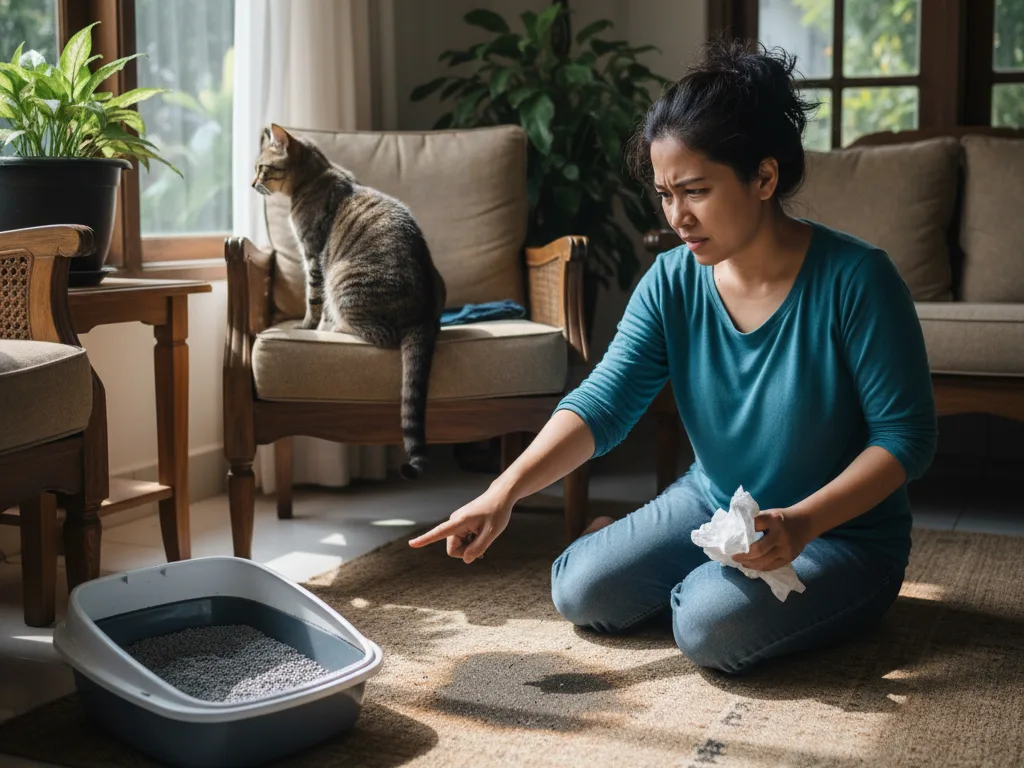
Cat house soiling is one of the most common — and most frustrating — complaints from cat owners. Before giving up or getting angry, know this: it is almost always fixable once the cause is identified.
First step: determine whether this is a medical problem or a behavioural one.
Step 1: Rule Out Medical Causes First
Don't Wait Until It's Too Late!
See a vet immediately if you notice any of the following:
- Repeatedly visiting the litter box but producing little or no urine (sign of urethral obstruction — emergency!)
- Blood in the urine or stool
- Straining hard to eliminate
- Crying/howling during elimination (sign of pain)
- Urinating far more frequently than usual
- Accompanied by lethargy or loss of appetite
Medical conditions such as FLUTD (Feline Lower Urinary Tract Disease), bladder stones, urinary tract infection, or constipation make cats feel uncomfortable in the litter box and cause them to seek alternatives. Until the underlying condition is treated, the behavioural problem will not resolve.
10 Non-Medical Causes (and Solutions)
1. Dirty Litter Box
Cats are fastidiously clean — they will refuse a litter box that smells or is full of waste. Solution: Scoop at least once daily for urine, and do a full litter change 1–2 times per week.
2. Litter Box Too Small
Cats need room to turn around and dig. Solution: Minimum size = 1.5× the cat's body length. Most adult cats need a box at least 50×35 cm.
3. Inconvenient Litter Box Location
Litter boxes placed near noisy appliances, high-traffic areas, or too close to food bowls are often avoided. Solution: Move to a quiet, easily accessible, and slightly private spot.
4. Too Few Litter Boxes (Multi-Cat Home)
Alpha cats often "guard" the litter box and intimidate others. Solution: Rule = number of cats + 1, placed in different locations.
5. Disliked Litter Type
Scented, crystal, or coarse-textured litters are often rejected. Solution: Try unscented fine-textured clumping litter. Switch gradually, not all at once.
6. Covered Litter Box
Some cats dislike hooded boxes because they feel stuffy and trap odours inside. Solution: Try an open-top box — many cats strongly prefer these.
7. Stress or Environmental Change
Moving house, new visitors, a new baby, or a new pet can trigger house soiling. Solution: Use a Feliway diffuser (synthetic pheromones), provide more litter boxes, and restore the cat's routine.
8. Urine Marking (Spraying)
Different from normal elimination — the cat sprays a small amount of urine onto vertical surfaces to mark territory. More common in unneutered males. Solution: Neutering is highly effective at reducing this behaviour.
9. Negative Association with the Litter Box
If your cat experienced pain while eliminating (due to FLUTD, etc.) and that pain occurred in the litter box, they may now avoid it by associating it with discomfort. Solution: Treat the medical condition and add a new litter box in a fresh location.
10. Too Little or Too Much Litter
Most cats prefer a litter depth of 3–5 cm. Too shallow means they cannot dig; too deep feels unstable. Solution: Try 4 cm as a starting point.
How to Clean Cat Urine Stains
- Blot the liquid immediately with a thick cloth or paper towels — do not rub, just dab
- Apply an enzymatic cleaner (not ordinary cleaner or vinegar — these are ineffective against urine proteins)
- Leave for 10–15 minutes, then blot again
- Repeat 2–3 times until the odour is completely gone
- Never use ammonia-based cleaners — the smell resembles urine and draws the cat back
- Once dry, place double-sided tape or aluminium foil over the spot to deter the cat from returning
Problem Still Not Resolved?
If you have tried all the behavioural solutions and the problem persists, there may be an undetected medical condition. A Birawa Vet doctor can come to your home for an examination and urine test (urinalysis).
Consult a VetFrequently Asked Questions
Why has my cat suddenly started eliminating outside the litter box when it never did before?
How many litter boxes do I need for multiple cats?
My cat urinated on the bed/sofa — how do I remove the smell and stain?
Can cats "take revenge" by eliminating outside the litter box?
What type of litter do cats prefer?
Medically Reviewed by
Birawa Vet Medical Team
This article has been verified by our medical team to ensure veterinary information accuracy.
The information in this article is for general educational purposes only and is not a substitute for direct consultation with a veterinarian.
Every pet has unique conditions. Do not hesitate to seek professional help if your pet is sick.
Share Article
Steril Promo This Month!
Sterilization procedure per WSAVA Spay-Neuter standard (inhalation/injectable anesthesia per patient condition, vital sign monitoring) at special price. Consult first before procedure.
Read Next
View All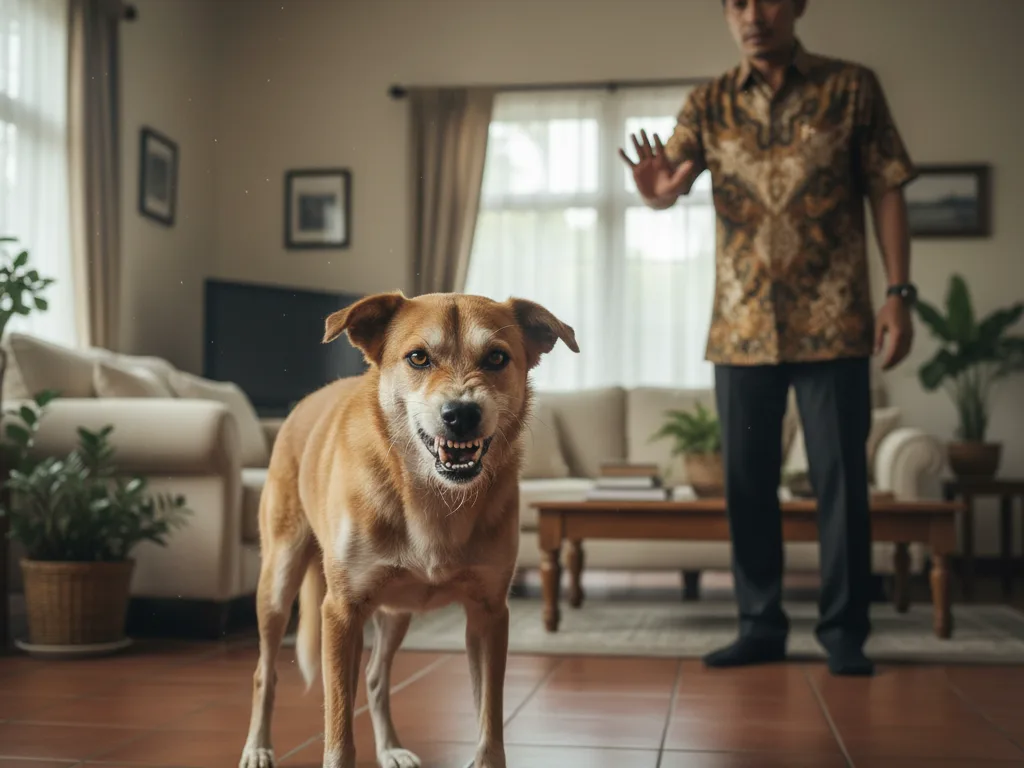
Dog Biting People: Causes, Dangers, and How to Handle It
Is your dog suddenly aggressive and biting people? Understand the causes of aggression in dogs, when it's dangerous and requires a. Free WhatsApp consultation.
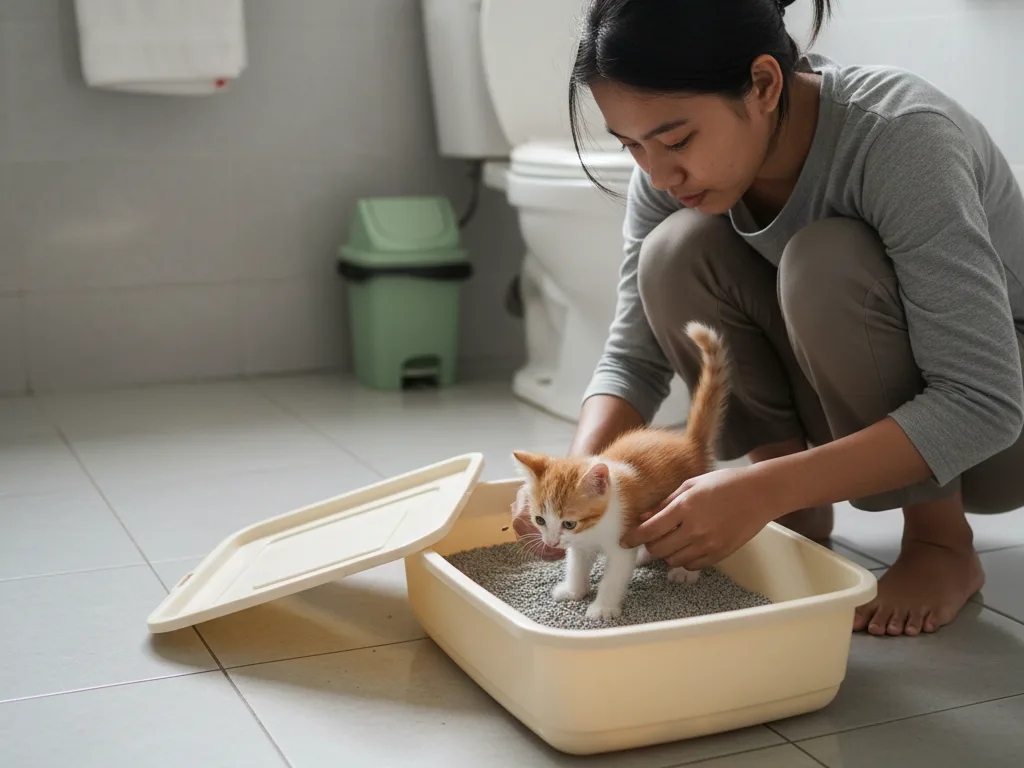
How to Train a Cat to Use the Litter Box: Foolproof Guide from Kitten to Adult
Cat refusing the litter box or going to the bathroom outside it? Complete guide to training a cat to use the litter box correctly. Free WhatsApp consultation.
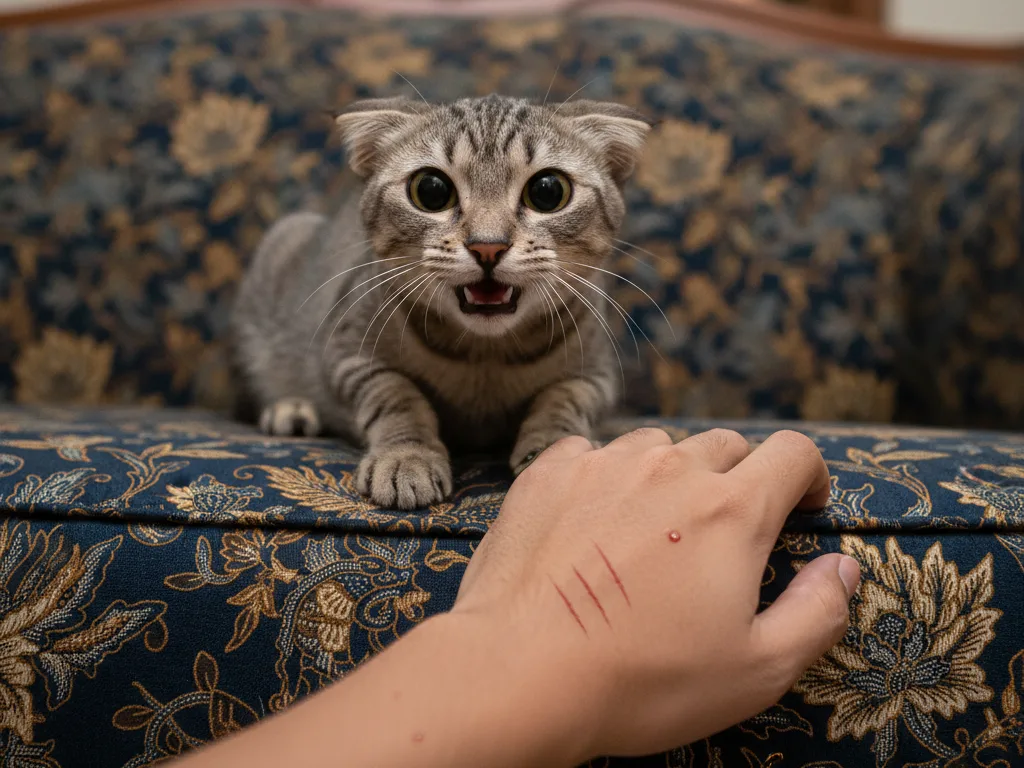
Cat Aggressive, Biting & Scratching: Causes & Solutions
A cat that suddenly bites or scratches for no apparent reason is often misunderstood as "misbehaving." But behind aggression lies a. Free WhatsApp consultation.