Key Takeaways
A foul-smelling cat mouth is not something to brush off — it can be a sign of serious dental disease, kidney failure, or diabetes. Free WhatsApp consultation.
Cat Bad Breath: Causes, Dangers, and How to Care for Your Cat's Teeth
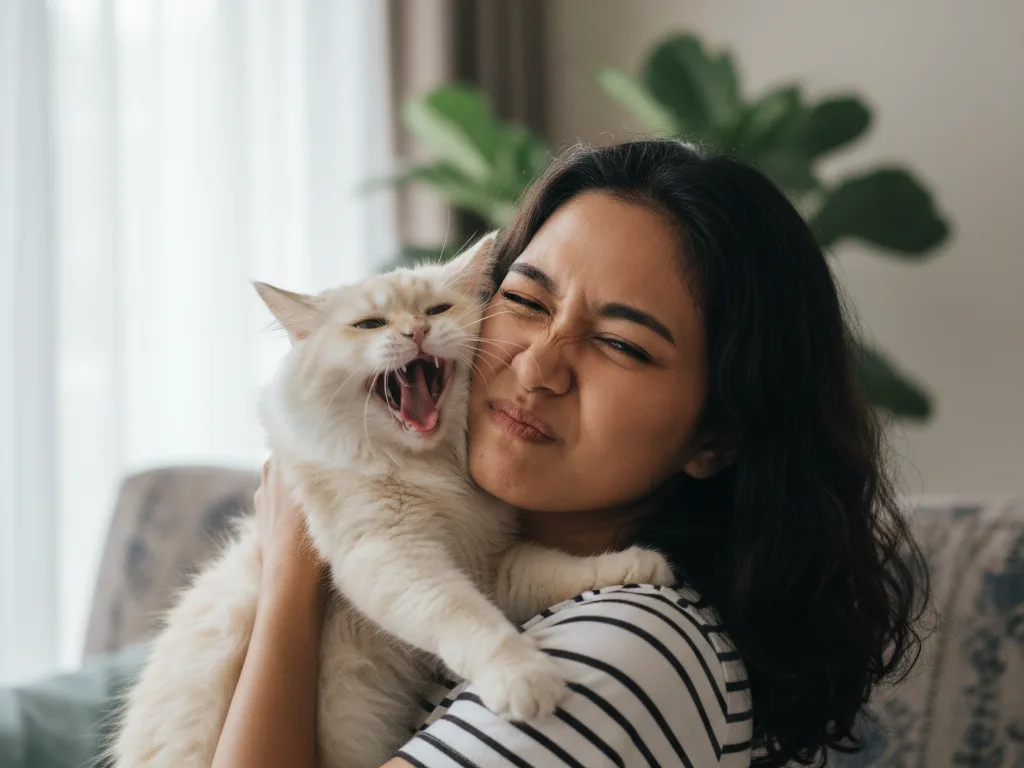
Cat owners often assume bad breath is normal — "it's just a cat, they eat fish." But severe bad breath is almost always a sign that something is medically wrong. More than 70% of cats over 3 years old have some degree of dental disease.
Causes of Cat Bad Breath: From Mild to Serious
Don't Wait Until It's Too Late!
1. Periodontal Disease (Most Common)
Plaque that isn't removed hardens into tartar. Tartar harbors bacteria that cause gum inflammation (gingivitis), which can progress to tooth and jawbone infection (periodontitis). The resulting odor is very pungent and unpleasant.
2. Stomatitis (Severe Oral Inflammation)
An autoimmune condition in which all the tissues of the mouth become severely inflamed. Extremely painful — causes reluctance to eat, excessive drooling, and a very foul mouth odor. Often associated with FIV/FeLV.
3. Kidney Failure
Poorly functioning kidneys cause urea to build up in the blood and get excreted through the breath — resulting in an ammonia or urine-like smell. If your cat's breath smells this way, see a vet right away. Read more about excessive drinking in cats as a sign of kidney failure.
4. Diabetes Mellitus
Sweet or fruity breath, similar to acetone — caused by ketosis (excessive fat burning). Usually accompanied by excessive drinking and urination, and weight loss.
5. Foreign Object in the Mouth
A bone, fish bone, or other object lodged in the gums or between teeth can rot and cause a severe smell. Carefully inspect your cat's oral cavity.
Dental Warning Signs That Need Immediate Vet Attention
- Cat reluctant to eat or chewing only on one side
- Excessive drooling, sometimes with blood
- Red, swollen, or bleeding gums when touched
- Loose or missing teeth
- Cat hissing or avoiding having the muzzle touched
- Breath smells like ammonia, urine, or acetone
How to Care for Your Cat's Dental Health at Home
Regular brushing (ideally 3 times a week)
Use a cat toothbrush and pet-specific toothpaste (chicken or tuna flavors are available). Never use human toothpaste — fluoride is dangerous if swallowed by cats.
Dental treats and chew toys
VOHC (Veterinary Oral Health Council) approved dental treats help reduce plaque mechanically. Not as effective as brushing, but a good option for cats that refuse the toothbrush.
Dry food (kibble)
The hard texture of kibble helps clean plaque mechanically when your cat bites down. Cats fed exclusively wet food tend to accumulate tartar more quickly.
Routine scaling at the clinic (once a year)
Hardened tartar cannot be removed by brushing — it requires ultrasonic scaling under anesthesia. Birawa Vet provides dental scaling services for pets in Jakarta.
Panggil Dokter ke Rumah
Ingin tahu estimasi biaya?
Frequently Asked Questions
Why does my cat's mouth suddenly smell terrible?
Is cat bad breath dangerous?
How do you brush a cat's teeth?
When does a cat need dental scaling?
Medically Reviewed by
Birawa Vet Medical Team
This article has been verified by our medical team to ensure veterinary information accuracy.
The information in this article is for general educational purposes only and is not a substitute for direct consultation with a veterinarian.
Every pet has unique conditions. Do not hesitate to seek professional help if your pet is sick.
Share Article
Senior Pets Need Special Care
Not sure if your pet's symptoms are normal or urgent? Tell our vet — we help evaluate without requiring immediate booking.
Read Next
View All
A Canary That Stops Singing: When It Is Medical, Not Just Moulting
A canary that stops singing is not always moulting. Learn when the silence is a natural phase and when it signals a health problem that needs a vet. Free WhatsApp consultation.

Sulcata Tortoise Won't Eat: Causes and When to See a Vet
Your sulcata on a food strike? Often it is not about taste but temperature, light, and enclosure care. Learn the causes and when to see an exotic vet. Free WhatsApp consultation.
Hedgehog Refusing Food or Bloating: When to See a Vet
Hedgehog refusing to eat or its belly looks bloated? Learn the warning signs, how it differs from a hibernation attempt, and when to see an exotic vet. Free WhatsApp consultation.