Key Takeaways
Is your cat or dog suddenly passing bloody, foul-smelling, mucus-filled stools? Beware of intestinal haemorrhage and dangerous. Free WhatsApp consultation.
Cat Suddenly Has Bloody, Mucus-Filled Diarrhoea? Stop the "Over-the-Counter Fix" Myth!
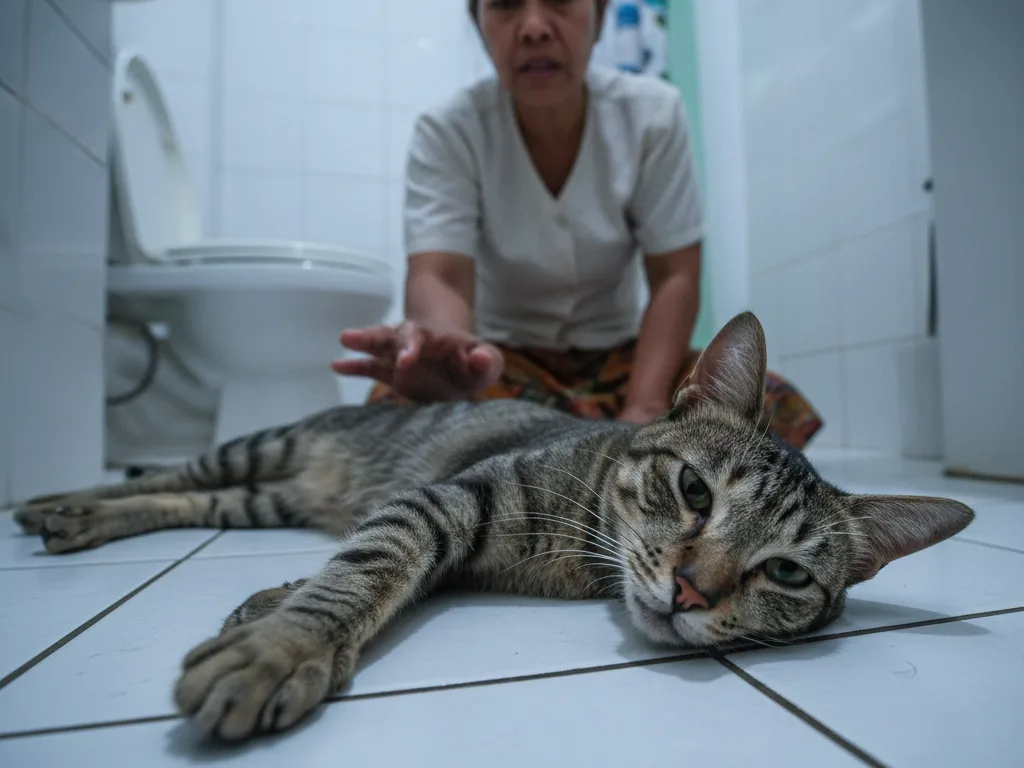
Finding a puddle of watery stool mixed with mucus and fresh blood in the litter box is every pet owner's nightmare. The distinctive foul smell signals that something has gone very wrong inside your pet's body.
Bloody diarrhoea in a carnivore is not just an "upset tummy." Fresh blood is clear evidence that your pet's intestinal wall is being severely damaged or sloughing away.
Visual Guide: Different Colours, Different Conditions
Don't Wait Until It's Too Late!
- Melena (Tar-black stool): Bleeding in the stomach or upper intestine. May be caused by a gastric ulcer or kidney failure.
- Haematochezia (Fresh red blood and mucus): Bleeding in the large intestine. Severe intestinal inflammation (colitis), often caused by a virus or parasites.
4 Main Suspects Behind Intestinal Bleeding
- Dangerous Viruses (Panleukopenia/Parvo): A death sentence for unvaccinated animals. The virus destroys the intestinal lining (villi). Mortality rate exceeds 90% without treatment.
- Parasites (Giardia/Coccidia): Microscopic protozoa from contaminated water that tear through the intestinal wall. Common in kittens and puppies.
- Foreign Bodies: Fish bones, shattered chicken bones, or plastic that injure the intestine as they pass through.
- Acute Haemorrhagic Diarrhoea Syndrome (AHDS): Acute bloody diarrhoea syndrome triggered by stress or fatty food (common in small-breed dogs).
At-Home First Aid
1. Food Fast
Stop food for 12–24 hours to rest the intestines. BUT fresh water or a pet oral rehydration solution must remain available to prevent dehydration.
2. Bland Diet
After fasting, offer plain boiled chicken breast (no seasoning) + soft white rice. Small portions, given frequently.
3. Check for Dehydration (Skin Tent Test)
Gently pinch the scruff of the neck. If the skin is slow to return to flat, your pet needs IV fluids immediately!
Disinfect the Environment: Kill the Virus!
Parvo/Panleukopenia viruses are extremely hardy (they can survive in the environment for up to 1 year). Mop floors and clean the enclosure with a bleach solution (e.g. Bayclin/Proclin) diluted 1:30 with water. Regular floor cleaner will NOT kill these viruses.
Medical Warning: The Danger of Human Medication
Never give Imodium or similar anti-diarrhoea medication intended for humans! These drugs paralyse the intestines. Harmful bacteria become TRAPPED inside, producing toxic gases and triggering Toxic Megacolon (intestinal necrosis or rupture) and sepsis.
Birawa Vet Solution: Fluid ICU at Your Home
Transporting a pet with severe diarrhoea in a car risks extreme stress and mess everywhere. We bring stabilisation equipment to your home:
- Fluid Therapy (IV Drip): Aggressively replaces lost body fluids to prevent hypovolaemic shock.
- Injections Without the Struggle: Anti-vomiting medication, gut-lining protectants, and antibiotics are given by injection (no forced pill-swallowing required).
- Rapid Test Kit: Detects Parvo/Panleukopenia virus on-site in 10 minutes.
Panggil Dokter ke Rumah
Frequently Asked Questions
What is the difference between ordinary diarrhoea and bloody diarrhoea?
Can I give my pet human anti-diarrhoea medication (such as Imodium)?
When should I call a vet?
Medically Reviewed by
Birawa Vet Medical Team
This article has been verified by our medical team to ensure veterinary information accuracy.
The information in this article is for general educational purposes only and is not a substitute for direct consultation with a veterinarian.
Every pet has unique conditions. Do not hesitate to seek professional help if your pet is sick.
Share Article
Read Next
View All
A Canary That Stops Singing: When It Is Medical, Not Just Moulting
A canary that stops singing is not always moulting. Learn when the silence is a natural phase and when it signals a health problem that needs a vet. Free WhatsApp consultation.
Sulcata Tortoise Won't Eat: Causes and When to See a Vet
Your sulcata on a food strike? Often it is not about taste but temperature, light, and enclosure care. Learn the causes and when to see an exotic vet. Free WhatsApp consultation.
Hedgehog Refusing Food or Bloating: When to See a Vet
Hedgehog refusing to eat or its belly looks bloated? Learn the warning signs, how it differs from a hibernation attempt, and when to see an exotic vet. Free WhatsApp consultation.