Key Takeaways
Reading signs of health and illness in captive deer, from feed and enclosure to biosecurity. Veterinary support, consultation over WhatsApp.
Maintaining Deer Health in Breeding Facilities
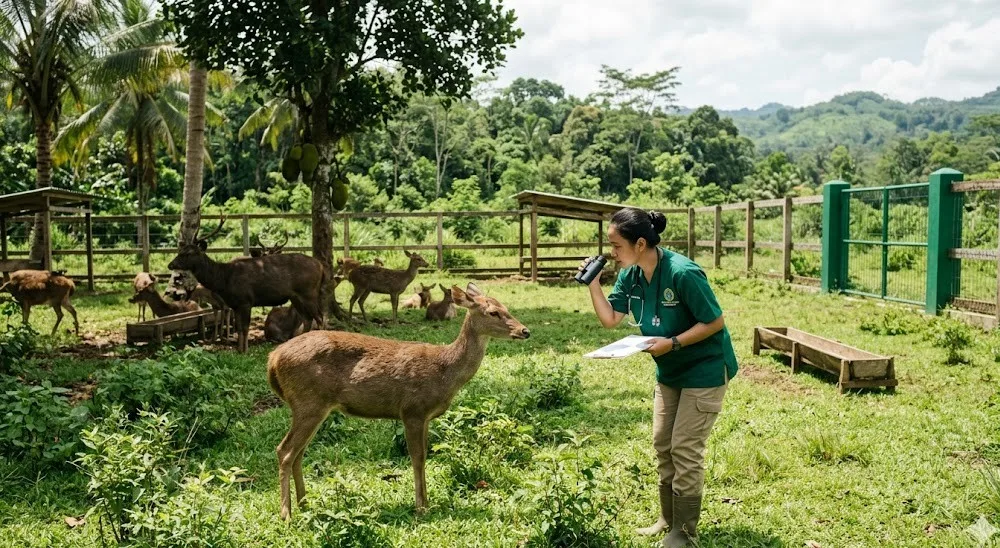
Managing a deer breeding facility means living alongside an animal skilled at hiding its condition. Deer are prey animals, and in the wild, an animal that looks weak is the one hunted first. That instinct carries over into the breeding enclosure. This is the first reality every manager must accept: by the time a deer finally looks clearly sick, its condition has often progressed far from the starting point.
This article is not a treatment prescription. I, drh. Muhammad Arif, write it as material for understanding, so facility managers can read wildlife conditions more sensitively and manage more orderly. Actual medical handling still requires direct examination by a vet.
Health Starts from What Looks Ordinary
Don't Wait Until It's Too Late!
Deer health in breeding facilities is rarely determined by one big event. It is determined by what looks ordinary and is repeated every day: adequate and appropriate feed, clean water always available, an enclosure that is not too crowded, and maintained cleanliness. A healthy deer is generally alert, eats heartily, moves normally, and has a proportionate body condition, neither too thin nor weak.
Because deer live in groups, attention must not stop at one animal. A good manager reads the herd as a whole. Is any one moving away from the group, lagging when the others eat, or standing apart with an unusual posture? Consistent daily observation is often more valuable than sophisticated equipment.
Signs That Should Not Be Ignored
Several changes deserve to be an alarm for managers to observe more closely and consider veterinary support:
- Reduced appetite in one or several animals, especially if it lasts more than a day.
- Weakness, withdrawing, or lagging from the group during feeding and movement.
- Diarrhoea or changes in droppings clearly different from usual.
- Lameness, wounds, or injury, including leg and antler problems in certain seasons.
- Coughing, heavy breathing, or discharge from the nose and eyes that can signal respiratory trouble.
- A decline in body condition that is slow but consistent.
Not every sign means a critical condition, but all are worth recording. A simple note of who, when, and what was seen will greatly help the vet assess the situation faster and more accurately.
Feed, Enclosure, and Water as the Foundation
Many health problems in breeding facilities are actually rooted in management, not germs. Feed of unstable quality, sudden changes in feed type, or a lack of fibre can disturb the digestion of deer, which are ruminants. An overcrowded enclosure increases stress while making disease easier to spread. Water that is rarely changed becomes a transmission route that is often overlooked.
Improving this management side often gives a greater and cheaper impact than simply treating sick animals one by one. So in support work, assessing feed, enclosure, and water is usually the first step before talking about treatment.
Ask the vet by your captive wildlife
Pick your wildlife and the chat opens pre-filled so our team knows the context exactly.
Biosecurity: Keeping the Healthy Healthy
Biosecurity sounds complicated, but its essence is simple: preventing disease from entering and preventing it from spreading. Managing new animals before merging them into the group, equipment cleanliness, limiting the traffic of people and vehicles, and waste management are parts of biosecurity sensible to apply at a breeding scale. For certain technical provisions that may be required by the conservation authority, it is best to verify directly with your regional BKSDA, because the provisions can differ between areas.
When to Involve a Vet
Veterinary support is most valuable not when the situation is already an emergency, but well before, as part of routine management. Periodic examinations, husbandry assessment, and tidy health documentation help the facility stand on a strong foundation. But if you see worrying signs, especially ones spreading to several animals, do not delay consulting.
Start with a Chat, Not with a Price
If you manage a deer breeding facility and want to organise its health side better, start with a conversation. Tell me your facility's condition over WhatsApp, and from there we assess the most fitting step for your wildlife.
See also Veterinary Services for Deer and Wildlife Breeding Facilities.
Frequently Asked Questions
How do I recognise a captive deer starting to get sick?
Do deer health problems always need medicine?
Are there specific BKSDA health requirements for deer breeding?
Can I consult before deciding on a visit?
Medically Reviewed by
Birawa Vet Medical Team
This article has been verified by our medical team to ensure veterinary information accuracy.
The information in this article is for general educational purposes only and is not a substitute for direct consultation with a veterinarian.
Every pet has unique conditions. Do not hesitate to seek professional help if your pet is sick.
Share Article
Senior Pets Need Special Care
Not sure if your pet's symptoms are normal or urgent? Tell our vet — we help evaluate without requiring immediate booking.
Read Next
View All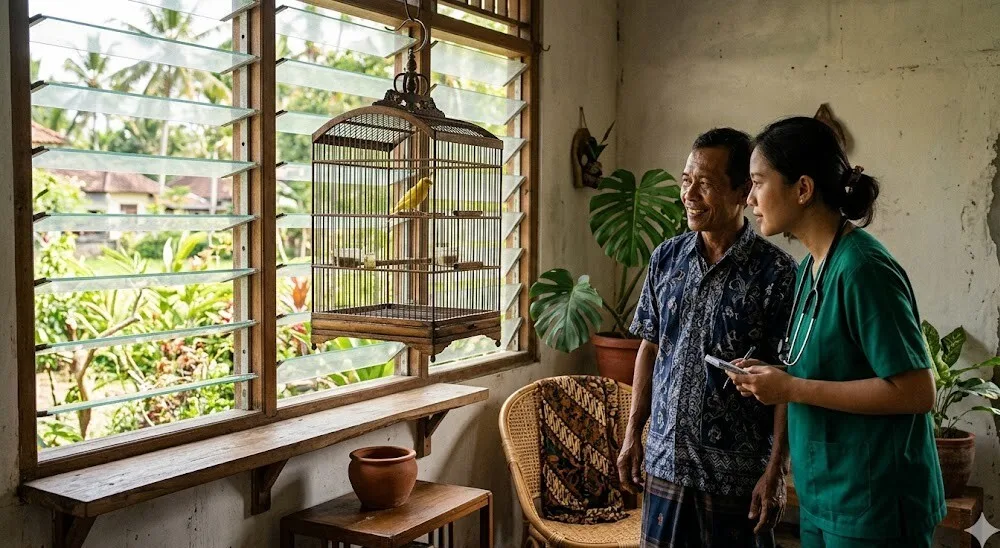
A Canary That Stops Singing: When It Is Medical, Not Just Moulting
A canary that stops singing is not always moulting. Learn when the silence is a natural phase and when it signals a health problem that needs a vet. Free WhatsApp consultation.
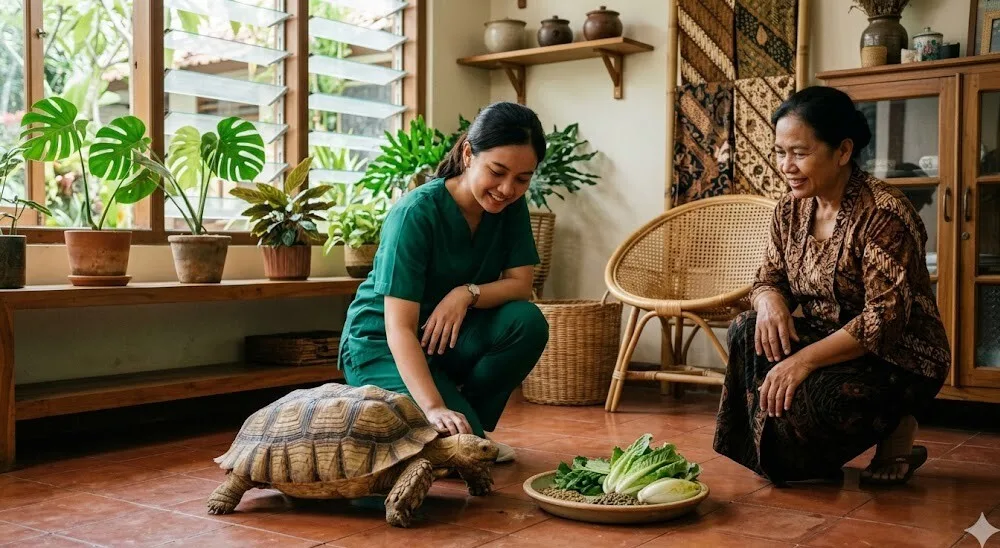
Sulcata Tortoise Won't Eat: Causes and When to See a Vet
Your sulcata on a food strike? Often it is not about taste but temperature, light, and enclosure care. Learn the causes and when to see an exotic vet. Free WhatsApp consultation.
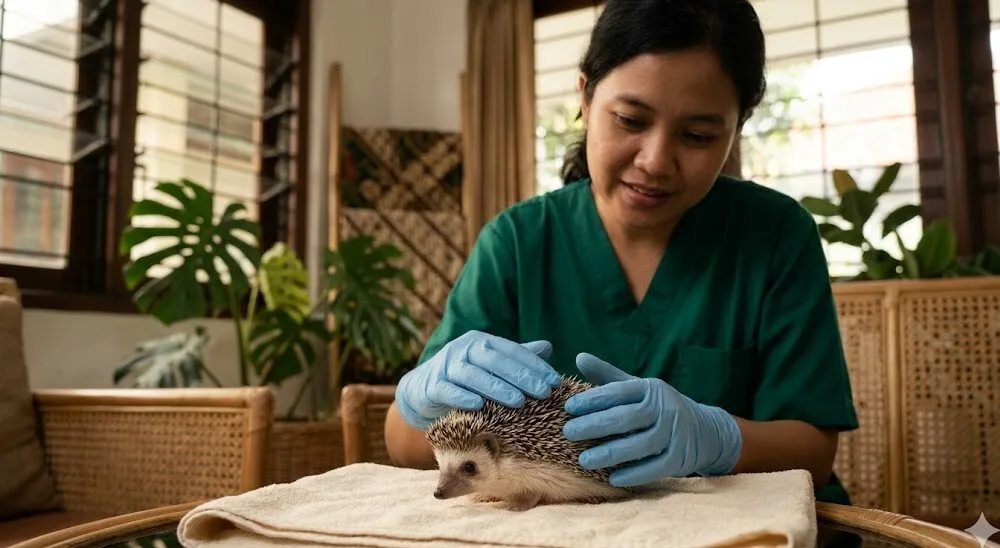
Hedgehog Refusing Food or Bloating: When to See a Vet
Hedgehog refusing to eat or its belly looks bloated? Learn the warning signs, how it differs from a hibernation attempt, and when to see an exotic vet. Free WhatsApp consultation.