Key Takeaways
A rabbit refusing to eat is a medical emergency unlike what you'd see in cats or dogs — a rabbit's digestive system can shut down. Free WhatsApp consultation.
Rabbit Not Eating: Causes, Dangers, and First Aid
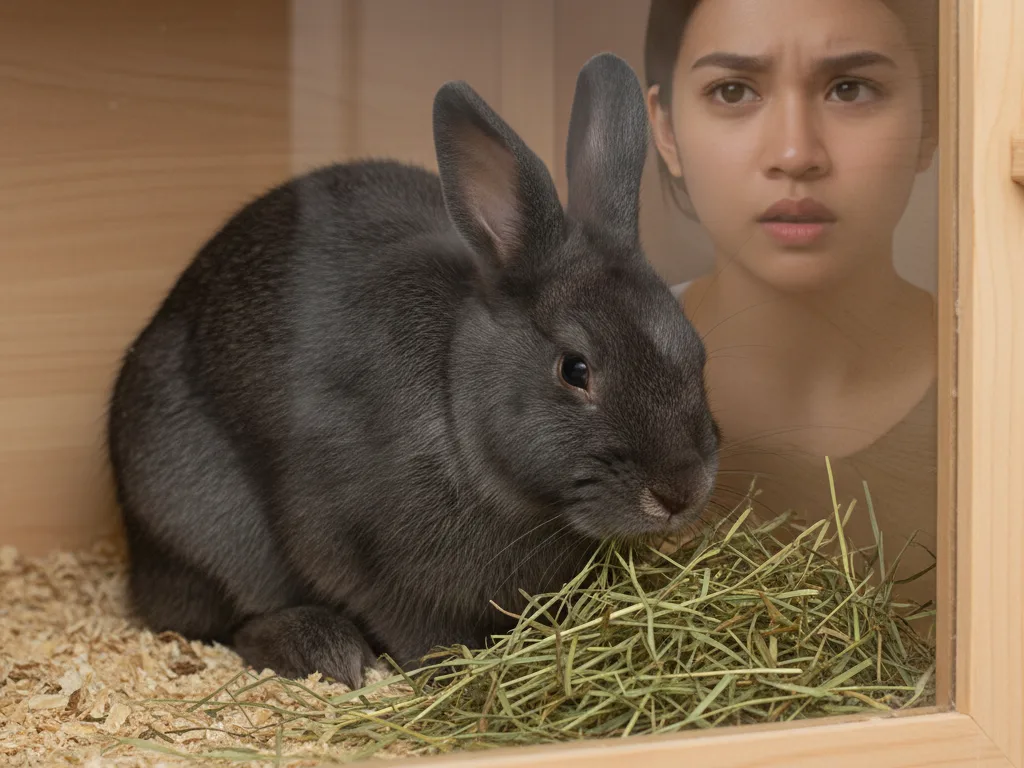
A rabbit that has not eaten for 6–8 hours is a medical emergency — not something that can "wait until tomorrow." This is very different from cats or dogs, which can go without food for much longer without immediate danger.
The Rabbit Emergency Rule: 6–8 Hours
If your rabbit has not eaten and has not produced droppings for 6–8 hours, contact a vet immediately. This is not overreacting — GI Stasis can be fatal within 24–48 hours.
Reasons a Rabbit May Stop Eating
1. GI Stasis (Most Dangerous)
Gut movement slows down or stops. Causes include stress, lack of fiber, dehydration, pain from another condition, or ingested fur. Signs: not eating, no droppings, hard or bloated belly, hunched posture, and teeth grinding (a sign of pain).
2. Dental Disease
A rabbit's teeth grow continuously. Malocclusion (abnormal tooth growth) or spurs (sharp tooth tips that cut the tongue or cheeks) cause pain when eating. The rabbit will refuse hard food but may still accept soft food.
3. Stress
Rabbits are very sensitive to environmental changes — a new enclosure, the presence of predators (sounds of dogs or cats), loud noises, or a new owner can cause a rabbit to stop eating. Provide a calm, safe environment.
4. Infection or Systemic Disease
Bacterial or viral infections (such as RHD — Rabbit Hemorrhagic Disease) or parasites can cause a rabbit to stop eating. Watch for other symptoms like fever, nasal or eye discharge, or lethargy.
5. Sudden Diet Change
Rabbits dislike sudden changes in diet. Transition food very gradually (10–20% per day) to avoid refusal and digestive upset.
First Aid at Home
- Always make sure fresh hay is available in abundance — Timothy hay or orchard grass is the primary source of fiber. It should make up 80% of a rabbit's diet. Keep offering it even if your rabbit seems uninterested.
- Provide fresh water — dehydration worsens GI Stasis. Make sure clean water is always accessible.
- Gently massage the belly — massage in a gentle clockwise circular motion over the abdomen to help stimulate gut movement. Do this for 5–10 minutes every hour.
- Check droppings — count how many there are and observe their shape. Very small, very few, or absent droppings are serious warning signs.
- Do not force-feed — force-feeding can cause aspiration (food entering the lungs). Let your rabbit try to eat on their own.
Read the full first aid guide for bloated rabbits and GI Stasis.
Don't Wait Until It's Too Late!
Panggil Dokter ke Rumah
Ingin tahu estimasi biaya?
Frequently Asked Questions
Why can't a rabbit be left without food for long?
What is GI Stasis in rabbits?
My rabbit isn't eating but is still moving around — is it still dangerous?
Are there vets in Jakarta who can treat rabbits?
Medically Reviewed by
Birawa Vet Medical Team
This article has been verified by our medical team to ensure veterinary information accuracy.
The information in this article is for general educational purposes only and is not a substitute for direct consultation with a veterinarian.
Every pet has unique conditions. Do not hesitate to seek professional help if your pet is sick.
Share Article
Need an Exotic Pet Vet?
Our vet understands exotic pet anatomy and medical needs — coming directly to your home.
Read Next
View All
A Canary That Stops Singing: When It Is Medical, Not Just Moulting
A canary that stops singing is not always moulting. Learn when the silence is a natural phase and when it signals a health problem that needs a vet. Free WhatsApp consultation.

Sulcata Tortoise Won't Eat: Causes and When to See a Vet
Your sulcata on a food strike? Often it is not about taste but temperature, light, and enclosure care. Learn the causes and when to see an exotic vet. Free WhatsApp consultation.
Hedgehog Refusing Food or Bloating: When to See a Vet
Hedgehog refusing to eat or its belly looks bloated? Learn the warning signs, how it differs from a hibernation attempt, and when to see an exotic vet. Free WhatsApp consultation.