Key Takeaways
Not every symptom needs an immediate vet visit, but some can be fatal if delayed. Learn the checklist of signs that require urgent vet care vs those that can be watched at home.
When Should You Take Your Pet to the Vet? A Self-Triage Guide from Home

One of the most common concerns among pet owners is: "Does this need a vet right now, or can it wait?" Going to the vet too often for minor issues is unnecessary, but delaying something that is genuinely an emergency can be fatal.
This self-triage guide helps you make better decisions from home — without panic and without being too late.
Emergency Signs: Contact a Vet Immediately
Don't Wait Until It's Too Late!
The following conditions cannot wait. Contact a vet or 24-hour emergency service right away:
EMERGENCY — Contact Vet Now
Signs That Need a Vet Within 24 Hours
Not an immediate emergency, but needs to be addressed today or tomorrow — do not delay more than 24 hours:
SEE VET WITHIN 24 HOURS
- ! Refuses to eat for more than 24 hours (cats) or 48 hours (dogs)
- ! Vomiting or diarrhea more than 3–4 times in 24 hours
- ! Very lethargic — won't play, not responding to calls but still conscious
- ! Signs of dehydration (dry gums, inelastic skin)
- ! Deep wounds, wounds that are pus-filled or have an odor
- ! Eyes or nose with thick green or yellow discharge
- ! Blood in urine or straining to urinate but still producing some
Can Monitor at Home — Contact Vet If It Worsens
MONITOR AT HOME (12–48 HOURS)
- ○ Occasional sneezing without colored discharge
- ○ Vomiting 1–2 times, cat is still active and willing to drink
- ○ Diarrhea once, no blood, animal is still active
- ○ Poor appetite for 1 day, but still drinking and active
- ○ Small wound or light scratch without signs of infection
- ○ Mild limping after jumping, still willing to put weight on the leg
- ○ Mild lethargy for one day after vaccination (normal side effect)
Special Notes by Pet Type
Cats are very good at hiding pain — this is a natural instinct. When a cat appears sick, its condition is often already more serious than it looks.
- • Male cat not urinating — absolute emergency within 6–12 hours. Urethral blockage can be fatal.
- • Not eating for more than 24–48 hours — risk of hepatic lipidosis (liver disease from fasting).
- • Continuously hiding — this is often a sign of serious illness, not just mood.
- • Breathing with mouth open — very abnormal in cats, this is an emergency.
Small exotic pets have very minimal energy reserves. What looks "slightly off" in a cat can mean a critical condition in a hamster or rabbit.
- • Not eating for >12 hours → consult a vet
- • Not moving from corner of cage → immediate evaluation
- • No droppings in cage → emergency (especially rabbits — GI stasis)
- • Bird at bottom of cage, won't perch → critical sign
- • Eyes partially closed during the day → not normal, needs evaluation
Not Sure If You Need a Vet? Ask Us via WhatsApp First
The Birawa Vet team is ready to help you do an initial triage via WhatsApp — for free. Describe the symptoms, send photos or videos, and we will help determine the best next step for your pet. If a vet visit is needed, our team can come to your home in South Jakarta and surrounding areas.
Free Consultation via WhatsAppFrequently Asked Questions
How do I know if my pet is seriously ill?
My cat vomited once — do I need to see a vet?
Should a dog that refuses to eat for a day go to the vet immediately?
When should exotic pets (rabbits, hamsters, birds) go to the vet?
Can I consult via WhatsApp before calling a vet to my home?
Medically Reviewed by
Birawa Vet Medical Team
This article has been verified by our medical team to ensure veterinary information accuracy.
The information in this article is for general educational purposes only and is not a substitute for direct consultation with a veterinarian.
Every pet has unique conditions. Do not hesitate to seek professional help if your pet is sick.
Share Article
Need an Exotic Pet Vet?
Our vet understands exotic pet anatomy and medical needs — coming directly to your home.
Read Next
View All
A Canary That Stops Singing: When It Is Medical, Not Just Moulting
A canary that stops singing is not always moulting. Learn when the silence is a natural phase and when it signals a health problem that needs a vet. Free WhatsApp consultation.

Sulcata Tortoise Won't Eat: Causes and When to See a Vet
Your sulcata on a food strike? Often it is not about taste but temperature, light, and enclosure care. Learn the causes and when to see an exotic vet. Free WhatsApp consultation.
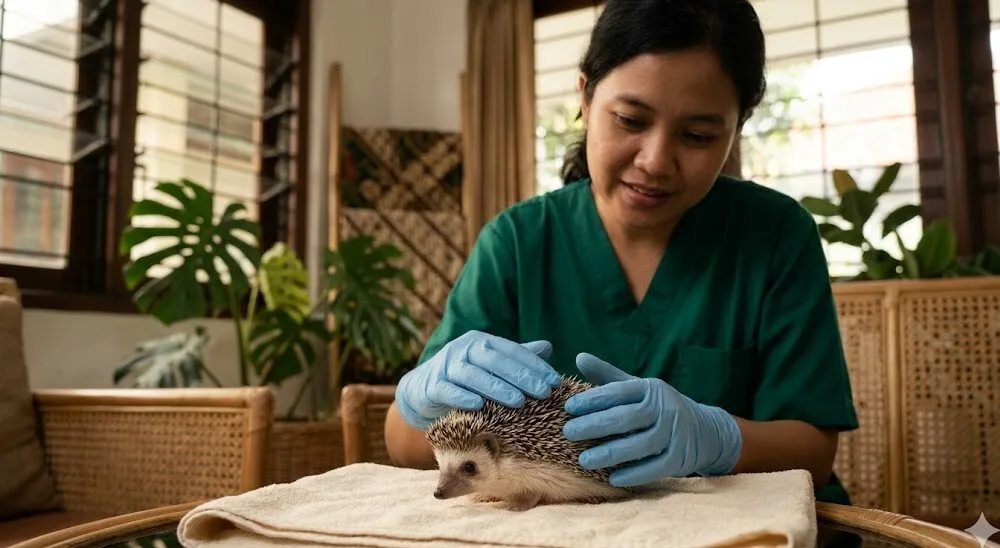
Hedgehog Refusing Food or Bloating: When to See a Vet
Hedgehog refusing to eat or its belly looks bloated? Learn the warning signs, how it differs from a hibernation attempt, and when to see an exotic vet. Free WhatsApp consultation.