Key Takeaways
An iguana refusing to eat can mean many things — from wrong enclosure temperature to Metabolic Bone Disease (MBD) that can cause. Free WhatsApp consultation.
Iguana Not Eating & Metabolic Bone Disease: Owner's Guide

An iguana that suddenly refuses to eat is one of the most common complaints from reptile owners. Unlike dogs or cats, iguanas are extremely sensitive to environmental conditions — and the causes of "not eating" can vary widely.
First Checklist: Inspect the Enclosure Environment
Don't Wait Until It's Too Late!
Before panicking, check these things first — because 60% of iguana appetite loss cases are caused by environmental issues:
| Parameter | Ideal | Problem Sign |
|---|---|---|
| Basking spot | 38–42°C | <35°C → appetite loss |
| Cool area | 26–29°C | >32°C → stress |
| UVB lamp | 10–12 hrs/day | No UVB → MBD within months |
| Humidity | 60–80% | <40% → dehydration |
Signs of Metabolic Bone Disease (MBD)
- 🦴 Trembling or bowed legs when walking
- 🦴 Lower jaw appears softer/deformed
- 🦴 Protruding or curved spine (kyphosis)
- 🦴 Iguana cannot lift its body when walking (belly dragging)
- 🦴 Seizures or tremors (very low blood calcium)
Butuh Dokter Hewan Eksotik?
Frequently Asked Questions
What is Metabolic Bone Disease (MBD) in iguanas?
What is the ideal enclosure temperature for an iguana?
What foods should not be given to iguanas?
Medically Reviewed by
Birawa Vet Medical Team
This article has been verified by our medical team to ensure veterinary information accuracy.
The information in this article is for general educational purposes only and is not a substitute for direct consultation with a veterinarian.
Every pet has unique conditions. Do not hesitate to seek professional help if your pet is sick.
Share Article
Need an Exotic Pet Vet?
Our vet understands exotic pet anatomy and medical needs — coming directly to your home.
Read Next
View All
A Canary That Stops Singing: When It Is Medical, Not Just Moulting
A canary that stops singing is not always moulting. Learn when the silence is a natural phase and when it signals a health problem that needs a vet. Free WhatsApp consultation.

Sulcata Tortoise Won't Eat: Causes and When to See a Vet
Your sulcata on a food strike? Often it is not about taste but temperature, light, and enclosure care. Learn the causes and when to see an exotic vet. Free WhatsApp consultation.
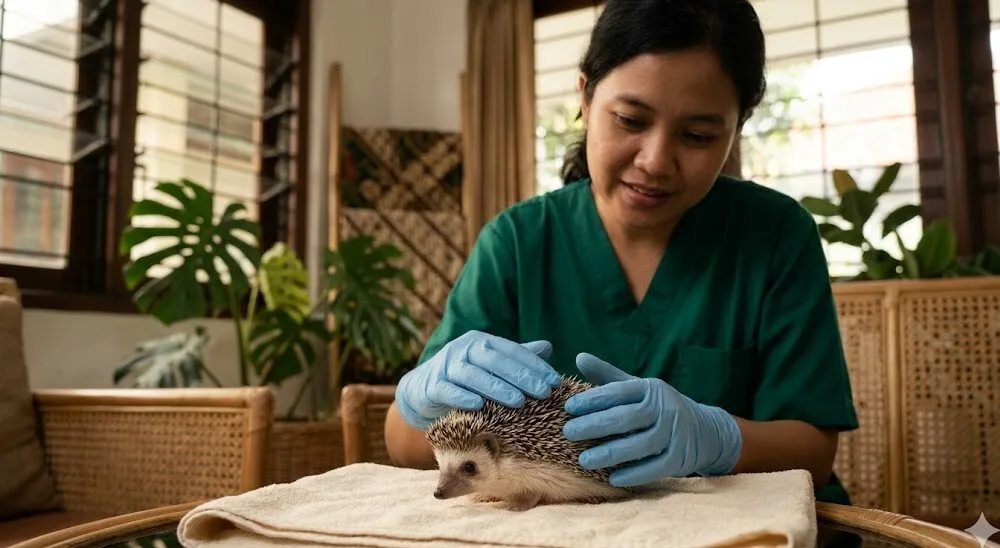
Hedgehog Refusing Food or Bloating: When to See a Vet
Hedgehog refusing to eat or its belly looks bloated? Learn the warning signs, how it differs from a hibernation attempt, and when to see an exotic vet. Free WhatsApp consultation.