Key Takeaways
Cat positive for FIV/FeLV? Not the end. Vet-written guide: early symptoms, transmission, treatment, prognosis. Free WhatsApp triage from Birawa Vet.
FIV & FeLV in Cats: Symptoms, Transmission, and Treatment
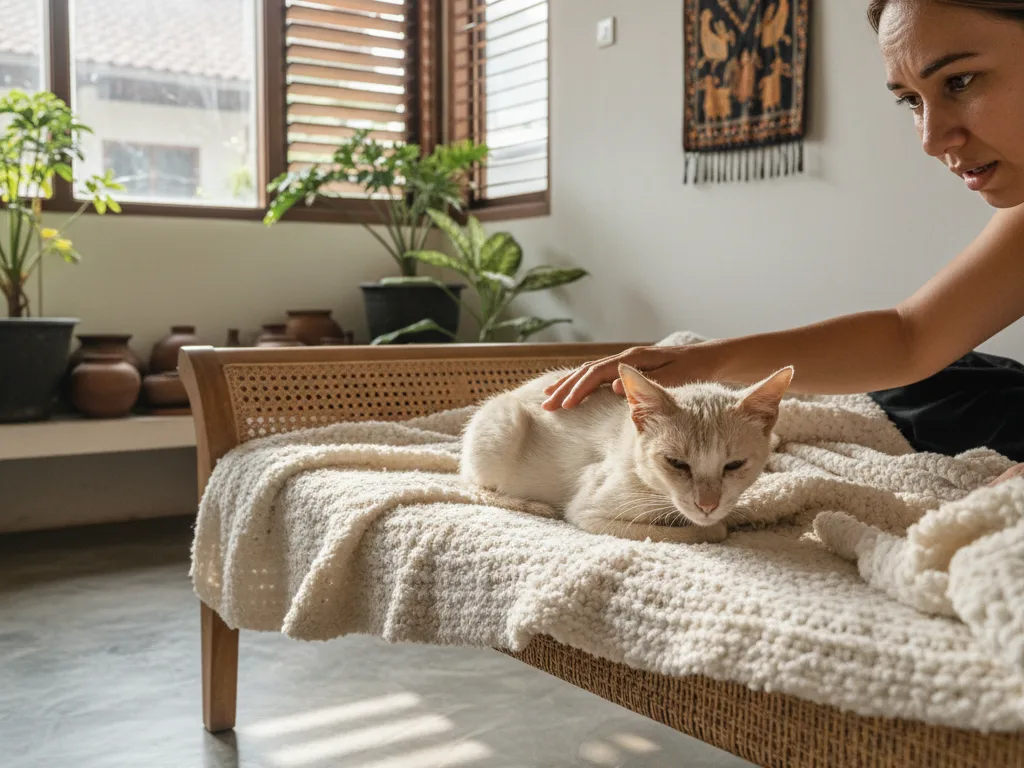
Receiving a positive FIV or FeLV test result is a difficult moment for any cat owner. But before panicking or thinking about euthanasia: a positive diagnosis does not automatically mean your cat needs to leave your life. With the right understanding and proper care, many FIV/FeLV cats can live comfortably and happily for years.
This article explains what FIV and FeLV are, the symptoms to watch for, how the viruses spread, treatment and long-term management, and prevention through FeLV vaccination and neutering.
What Is FIV vs FeLV?
Don't Wait Until It's Too Late!
FIV (Feline Immunodeficiency Virus) and FeLV (Feline Leukemia Virus) are both retroviruses that attack cats, but their behaviour and severity differ. FIV is similar to human HIV — it slowly suppresses the immune system, the latent phase can last years, and cats often appear healthy for a long time. FeLV is more aggressive — it attacks the bone marrow and blood cells, can cause severe anaemia and cancer (lymphoma), with a shorter average life expectancy.
Important to understand: neither virus is transmissible to humans. You can safely pet, hug, and care for an FIV/FeLV-positive cat. The risk is only to other cats in the household.
FIV vs FeLV Comparison Table
| Factor | FIV | FeLV |
|---|---|---|
| Full name | Feline Immunodeficiency Virus | Feline Leukemia Virus |
| Main route of transmission | Deep bite wounds (fighting) | Saliva, nasal discharge, grooming, mother to kitten |
| Ease of transmission | Low (casual contact is safe) | High |
| Long-term prognosis | Relatively good (can reach 10+ years) | More serious (average 2–3 years) |
| Vaccine available in Indonesia? | Not widely available | Yes (recommended for at-risk cats) |
| Transmissible to humans? | No | No |
FeLV Symptoms in Cats — What to Watch For
The early phase of both FIV and FeLV is often asymptomatic for months or even years. Symptoms appear when immunity weakens and the cat becomes vulnerable to opportunistic infections. Because the signs are non-specific, many owners only realise something is wrong after recurrent illness.
Signs that warrant an immediate vet visit:
- Recurrent upper respiratory infections (sneezing, nasal discharge)
- Swollen, red, bleeding gums (stomatitis)
- Unexplained weight loss
- Intermittent fever
- Enlarged lymph nodes (neck, armpits)
- Dull, thinning coat
- Skin infections, slow-healing wounds
- Anaemia (pale gums) — more common with FeLV
Because these symptoms also occur in many other illnesses (e.g. cat flu, parasites, or kidney disease), a blood FIV/FeLV test is the only way to confirm diagnosis. Rapid tests need only a few drops of blood and produce results in 10–15 minutes.
How FIV/FeLV Spread Between Cats
Understanding the transmission routes helps you avoid both panic and complacency about the risk to other cats in the household.
- FIV — Deep bites during fighting. Most common in unneutered outdoor male cats. The FIV virus is in saliva and enters through deep bite wounds. Casual contact (sharing bowls, sleeping together) carries very low risk.
- FeLV — Casual contact between housemates. The FeLV virus is in saliva, nasal discharge, urine, and faeces. Transmission happens through mutual grooming, shared water bowls, or simply sleeping in close contact. Kittens can be infected by their mother in utero or through milk.
- Not transmissible to humans, dogs, or other animals. FIV and FeLV are species-specific — they only infect cats.
- Not airborne over distance. Both viruses are fragile outside the cat's body and quickly killed by ordinary household disinfectants.
For this reason, every new cat entering your home must be tested for FIV/FeLV before being mixed with existing cats — especially if you adopt from a shelter, the street, or an adult cat with unclear history.
Treatment & Care for FIV/FeLV Cats
No drug can eliminate FIV or FeLV virus — both are retroviruses that integrate into the host's DNA. But "no cure" does not mean "no hope". Proper management can significantly extend life expectancy and maintain a good quality of life.
5 Pillars of Managing an FIV/FeLV-Positive Cat
1. Routine Checkup Every 6 Months
Early detection of opportunistic infection is key. A complete blood count (CBC + chemistry) every 6 months helps monitor anaemia, kidney and liver function, and early signs of lymphoma. When to see a vet immediately if new symptoms appear — do not wait.
2. Premium Cooked Nutrition
High-quality food with adequate protein. Avoid raw food (BARF) for FIV/FeLV cats — the risk of pathogenic bacteria (Salmonella, E. coli) is much higher because of weakened immunity. Choose premium wet or dry food from veterinary-formulated brands.
3. Indoor-Only & Minimise Stress
Stress accelerates immune decline. A stable environment, consistent routine, and adequate enrichment (toys, cat tree, sunny spot) maintain mood and immunity. Indoor-only also protects from outdoor pathogens and prevents transmission to neighbourhood cats.
4. Treat Secondary Infections Quickly
Stomatitis, respiratory infection, skin infection, or diarrhoea in FIV/FeLV cats should not be left to "heal on its own" — their immunity is not strong enough. Visit the vet as soon as symptoms appear. Antibiotics, antifungals, or antivirals are given as indicated.
5. Routine Vaccination Remains Important
FIV/FeLV cats still need FVRCP and rabies vaccines to protect against other diseases — but use inactivated (killed) vaccines, not live vaccines. Discuss with your vet first. See also at-home cat vaccination guide.
"Many of the FIV-positive cats I treat live to 12–15 years old with good quality of life. The keys are consistent checkups, cooked nutrition, and never waiting if symptoms appear — immunocompromised cats do not have the reserves to "wait until tomorrow"."
Prevention: FeLV Vaccine & Neutering
Prevention is far cheaper and more effective than treatment. Three steps proven to significantly lower FIV/FeLV risk:
- FeLV vaccine for at-risk cats — outdoor cats, multi-cat households, or newly adopted cats. Effectiveness 70–80%. An FeLV-negative test is required before the first vaccine. See cat vaccination service in Jakarta.
- Neuter male cats — drastically reduces fighting and therefore FIV risk. Neutering also lowers the risk of escaping, urine marking, and testicular tumours. See cat neutering service and best age to neuter a cat.
- Indoor-only lifestyle — indoor cats have far lower FIV/FeLV risk, live on average 3–5 years longer, and do not spread virus to the feral cat population.
- FIV/FeLV testing for all new cats before introducing them to existing cats. Quarantine 2–4 weeks in a separate room.
Think Your Cat May Need an FIV/FeLV Test?
Birawa Vet can perform FIV/FeLV testing and management consultations at your home across South Jakarta, BSD, and surrounding areas. Your cat avoids the stress of clinic travel — the blood sample is taken at home, rapid test results in 15 minutes, and findings are discussed directly with the vet on the spot. For newly diagnosed cats, we also help plan 6-monthly checkups and nutrition recommendations.
Frequently Asked Questions
What are FIV and FeLV in cats?
What are the symptoms of FeLV in cats to watch out for?
How are FIV and FeLV transmitted between cats?
How is an FIV/FeLV-positive cat treated?
Are there FeLV and FIV vaccines for prevention?
My cat tested FIV positive — does it need to be euthanised?
Medically Reviewed by
Birawa Vet Medical Team
This article has been verified by our medical team to ensure veterinary information accuracy.
The information in this article is for general educational purposes only and is not a substitute for direct consultation with a veterinarian.
Every pet has unique conditions. Do not hesitate to seek professional help if your pet is sick.
Share Article
Need End-of-Life Consultation?
Our team helps evaluate your pet's condition with an empathetic, no-pressure approach.
Read Next
View All
A Canary That Stops Singing: When It Is Medical, Not Just Moulting
A canary that stops singing is not always moulting. Learn when the silence is a natural phase and when it signals a health problem that needs a vet. Free WhatsApp consultation.

Sulcata Tortoise Won't Eat: Causes and When to See a Vet
Your sulcata on a food strike? Often it is not about taste but temperature, light, and enclosure care. Learn the causes and when to see an exotic vet. Free WhatsApp consultation.
Hedgehog Refusing Food or Bloating: When to See a Vet
Hedgehog refusing to eat or its belly looks bloated? Learn the warning signs, how it differs from a hibernation attempt, and when to see an exotic vet. Free WhatsApp consultation.