Key Takeaways
Panleukopenia is the number one killer of cats. Learn the critical symptoms, incubation period, how the virus attacks the bone. Free WhatsApp consultation.
Why Is Panleukopenia Called the "Grim Reaper" for Cats? A Complete Medical Guide for Owners
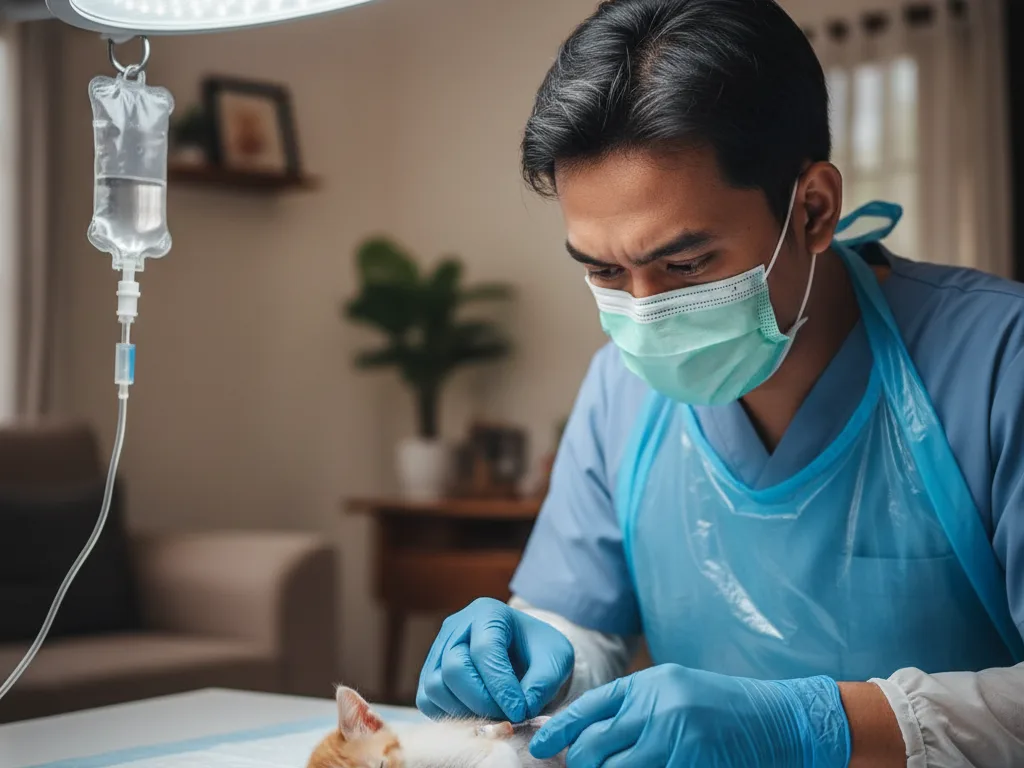
As vets, one of the most critical moments in our South Jakarta practice is diagnosing Feline Panleukopenia Virus (FPV). This disease is often called "Feline Distemper," though virologically it differs from canine distemper. Clinically, feline panleukopenia is one of the most lethal diseases because it can cripple the immune system before external symptoms are fully visible.
Quick Facts: Feline Panleukopenia
Don't Wait Until It's Too Late!
- Cause: Feline Parvovirus (FPV) — non-enveloped DNA virus.
- Mortality rate: 50–90% in kittens without intensive treatment.
- Target organs: bone marrow (immunity), gastrointestinal tract, lymphoid tissue.
- Virus survival: can persist for up to 1 year in the environment.
- Primary prevention: core combination vaccination on the correct schedule.
1. Pathophysiology: How Does the Virus Destroy the Body?
Panleukopenia is far more than ordinary diarrhoea. Medically, FPV has a high affinity for rapidly dividing cells. Three main systems are attacked: the bone marrow, the intestinal epithelium, and the foetal nervous tissue.
Destruction of the immune system: the virus attacks progenitor cells in the bone marrow, halting white blood cell (leucocyte) production. Without these "soldiers," even normal bacteria in the body can become killers.
Intestinal epithelial damage: FPV destroys cells in the Lieberkühn crypts. Intestinal villi become blunted and slough off, leading to severe diarrhoea, bacterial translocation, sepsis, and endotoxic shock.
Foetal brain damage: if the mother is infected during pregnancy, the virus can attack the foetal cerebellum. Kittens born may develop cerebellar hypoplasia (wobbly cat syndrome) with permanent balance impairment.
2. Transmission & Environmental Risk (Fomites)
Many indoor cat owners ask, "How did my cat get panleukopenia if it never goes outside?" FPV is a non-enveloped virus with an extremely stable protein capsid that can persist for months on inanimate surfaces.
The primary route of transmission is contact with urine, faeces, vomit, or saliva from an infected cat. However, fomites — such as shoe soles, vehicle tyres, clothing, second-hand cages, and bedding — can all "carry" the virus into the home.
This virus is not killed by 70% alcohol, iodine, or standard floor cleaners. A sodium hypochlorite (bleach)-based disinfectant at the correct dilution is required to truly inactivate it, and this forms part of the home prevention protocol against feline parvovirus.
3. Symptoms of Feline Panleukopenia: The Golden Period
Speed of detection is often the difference between life and death. In the peracute phase — especially in young kittens — sudden death can occur within hours and is frequently mistaken for "poisoning."
In the acute phase, warning signs of feline panleukopenia include:
- Biphasic fever (extremely high temperature that drops, then may rise again or fall into hypothermia).
- "Hanging over the water bowl" behaviour: the cat hunches over the bowl but does not drink.
- Repeated vomiting of yellow or clear foamy fluid.
- Watery diarrhoea with a very strong foul smell, sometimes mixed with blood and intestinal tissue.
- Signs of severe dehydration: poor skin turgor, dry and sticky gums.
4. Clinical Diagnosis at Birawa Vet
At Birawa Vet, we use an evidence-based medicine approach to confirm a panleukopenia diagnosis.
- FPV Ag rapid test: detects viral antigen from a faecal sample with results in approximately 10 minutes.
- Complete blood count (CBC): monitors leucocyte levels as a prognostic indicator. A count of < 1,000 cells/µL typically indicates a very poor prognosis.
5. Treatment Strategy: Birawa Vet Protocol
There is no instant antiviral drug that can "erase" FPV. The focus of therapy is aggressive supportive care to sustain the vital organs until the cat's immune system can recover — usually within 5–7 days.
- Aggressive fluid therapy: intravenous or subcutaneous fluids with electrolyte correction (e.g., added potassium) and glucose to prevent hypoglycaemia.
- Anti-emetics: anti-vomiting medication given by the vet to control nausea and vomiting.
- Antibiotics: to prevent or control secondary bacterial sepsis when leucocyte counts are critically low.
- Nutritional support & vitamins: including B-complex vitamins and immune support.
6. Home Nursing Guide
If the owner opts for outpatient care with Birawa Vet supervision, disciplined home nursing is essential. Key points include:
- Maintain body temperature: provide a heat source (heating pad or a warm water bottle wrapped in a towel) and avoid cold floor contact.
- Strict isolation: separate completely from other cats; the virus can continue to shed in faeces for up to 6 weeks after recovery.
- Controlled force feeding: if vomiting has stopped, offer small, frequent amounts of liquid recovery food.
- Environmental disinfection: use a sodium hypochlorite (bleach) solution at approximately a 1:32 ratio on all contaminated areas.
7. FAQ: Maternal Antibody Interference & Vaccination Schedule
One of the most common questions we hear: "Doctor, my cat received its first vaccine as a kitten — why did it still get panleukopenia?"
Immunologically, this is related to the phenomenon of maternal antibody interference. Kittens receive passive antibodies from the mother through colostrum. If a vaccine is given while the mother's antibodies are still high, the vaccine may be neutralised, preventing optimal active immunity from forming — even though the cat technically "had a vaccine."
As the maternal antibodies decline before the next booster, a gap known as the window of susceptibility opens — a period when the kitten is highly vulnerable to FPV. Determining the correct vaccination schedule is therefore critical, and should be discussed with your vet. For a practical explanation of schedules and core combination vaccine types, refer to our home cat vaccination guide .
Early Detection Saves Lives
If your cat begins vomiting yellow fluid, is lethargic, and shows signs of dehydration, do not wait until "tomorrow." Panleukopenia progresses extremely fast and every hour counts. One of the best preventive steps is ensuring kittens and adult cats receive core combination vaccines on the correct schedule.
Contact Birawa Vet immediately for blood work and fluid stabilisation, including the option of intensive home care through our Home Visit service. For a practical guide to vaccination schedules, types, and the home vaccination process, read our educational article on home cat vaccination , which covers the topic in a structured, comprehensive format.
Frequently Asked Questions
Can Panleukopenia be cured?
How long does the Panleukopenia virus survive in the home?
Can Panleukopenia spread to humans?
Medically Reviewed by
Birawa Vet Medical Team
This article has been verified by our medical team to ensure veterinary information accuracy.
The information in this article is for general educational purposes only and is not a substitute for direct consultation with a veterinarian.
Every pet has unique conditions. Do not hesitate to seek professional help if your pet is sick.
Share Article
Schedule Home Vaccination
Vet comes to your home. Complete vaccines, official booklet, no clinic queues.
Read Next
View All
A Canary That Stops Singing: When It Is Medical, Not Just Moulting
A canary that stops singing is not always moulting. Learn when the silence is a natural phase and when it signals a health problem that needs a vet. Free WhatsApp consultation.
Sulcata Tortoise Won't Eat: Causes and When to See a Vet
Your sulcata on a food strike? Often it is not about taste but temperature, light, and enclosure care. Learn the causes and when to see an exotic vet. Free WhatsApp consultation.
Hedgehog Refusing Food or Bloating: When to See a Vet
Hedgehog refusing to eat or its belly looks bloated? Learn the warning signs, how it differs from a hibernation attempt, and when to see an exotic vet. Free WhatsApp consultation.