Key Takeaways
A crashing lovebird is often noticed too late because birds hide illness so well. Learn the early signs and when to see a vet right away. Free WhatsApp consultation.
A Sick or Crashing Lovebird: Signs You Must Not Ignore
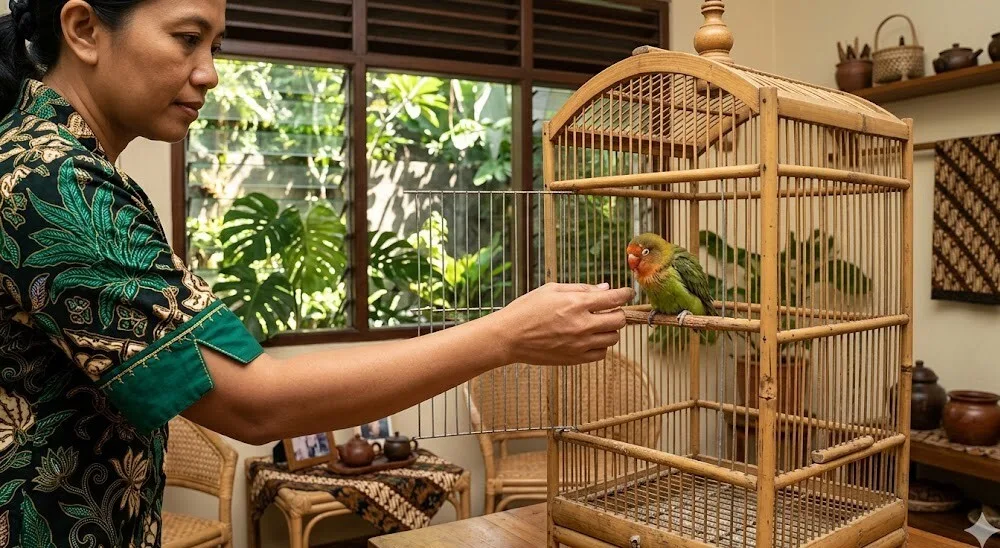
Lovebird owners often tell the story with the same tone: yesterday it was lively and singing, this morning it suddenly went quiet in the corner of the cage. As if the illness arrived overnight. But it almost never works that way. A lovebird, like nearly all birds, is very skilled at hiding a declining body. That instinct is inherited from wild life, where looking weak means becoming a target. By the time it finally looks like it has "crashed", its body has actually been struggling for several days.
This is not to make you panic over every small change. Quite the opposite. The more you know the early signs, the calmer your decisions, and the greater the chance the bird recovers.
Why a Lovebird Looks Healthy Until the Last Moment
Don't Wait Until It's Too Late!
A lovebird has a very high metabolism and a small body. That means its energy reserves are thin and its condition can change fast. As long as it still has strength, it will try to look normal, keep perching, keep eating a little, keep singing. Only once its energy truly drops does the mask fall. So what appears as a "sudden crash" is actually the final stage of a process already underway. Understanding this changes how we observe: we stop waiting until it is clearly severe, and start noticing subtle changes earlier.
Early Signs Often Missed
Some changes look trivial but actually say a lot. A normally active lovebird that becomes quieter and drowsy during the day. Feathers fluffed for a long time while the body looks rounded and lethargic; this is how a bird holds in body heat when unwell. A bird that perches more at the cage floor than on its upper perch. Eyes half-closed when it is not time to sleep. A reduced appetite, or eating that looks like it happens but the food does not decrease much.
One very helpful thing that is often ignored is the droppings. A healthy lovebird's droppings have a relatively consistent pattern. If they suddenly become very watery, change colour sharply, or stick to the feathers around the vent, that is a signal worth noticing, not just "ordinary mess".
Ask the vet by your bird type
Pick your bird and the chat opens pre-filled so our team knows exactly which type it is.
Signs That Must Already Be Treated as Urgent
There are symptoms that should not wait until tomorrow. A lovebird with laboured breathing, the tail bobbing with each breath, an open beak while breathing, or a faint squeaking sound. This points to respiratory trouble, and in birds such a condition can worsen quickly. Discharge or crust around the nostrils and eyes, or swollen eyes, also need examination. Chronic nasal disease in birds, often called snot by hobbyists, and chronic respiratory trouble are not trivial and cannot be solved with shop-bought drops.
The most urgent: a lovebird that has truly stopped eating and drinking. In a bird this small, not eating for even a few hours can lead to a critical state.
A Mistake Born of Love
Almost every owner I meet does it out of love, not neglect: as soon as the bird looks weak, they immediately give a tonic, shop vitamins, or drops that are said to be effective. The intention is good, but this step often muddies things. Many such products have no clear dosing basis and do not address the cause of illness. Giving medicine without knowing what is really happening is the same as guessing in the dark. The right first step is not to medicate, but to confirm the cause first. I do not call myself a specialist, but I am experienced in treating pet birds and I know well how fast a lovebird worsens when the first step is wrong.
When to Consult
The practical rule is simple. If the bird still eats, is still active, and the changes are subtle, you may observe while consulting. But once respiratory trouble appears, continuously fluffed feathers with lethargy, or a lost appetite, do not wait. In lovebirds, time is a real factor.
You do not have to decide on a visit right away. Tell me the symptoms first over WhatsApp, include a photo or video if you have one, and I help judge how urgent it is. This initial consultation is free, and I would rather you ask too early than too late.
Want to read more? See Bird Vet Home Visit Jabodetabek and a canary that stops singing: when it is medical, not just moulting.
Frequently Asked Questions
My lovebird is just quieter than usual, is that a sign of illness?
Is giving vitamins or bird tonics safe as a first step?
My bird often fluffs its feathers. Does that always mean illness?
How long can a lovebird that has stopped eating last?
If I am unsure whether this is an emergency, what should I do?
Medically Reviewed by
Birawa Vet Medical Team
This article has been verified by our medical team to ensure veterinary information accuracy.
The information in this article is for general educational purposes only and is not a substitute for direct consultation with a veterinarian.
Every pet has unique conditions. Do not hesitate to seek professional help if your pet is sick.
Share Article
Senior Pets Need Special Care
Not sure if your pet's symptoms are normal or urgent? Tell our vet — we help evaluate without requiring immediate booking.
Read Next
View All
A Canary That Stops Singing: When It Is Medical, Not Just Moulting
A canary that stops singing is not always moulting. Learn when the silence is a natural phase and when it signals a health problem that needs a vet. Free WhatsApp consultation.

Sulcata Tortoise Won't Eat: Causes and When to See a Vet
Your sulcata on a food strike? Often it is not about taste but temperature, light, and enclosure care. Learn the causes and when to see an exotic vet. Free WhatsApp consultation.
Hedgehog Refusing Food or Bloating: When to See a Vet
Hedgehog refusing to eat or its belly looks bloated? Learn the warning signs, how it differs from a hibernation attempt, and when to see an exotic vet. Free WhatsApp consultation.