Key Takeaways
Cat refusing the litter box or going to the bathroom outside it? Complete guide to training a cat to use the litter box correctly. Free WhatsApp consultation.
How to Train a Cat to Use the Litter Box: Foolproof Guide from Kitten to Adult
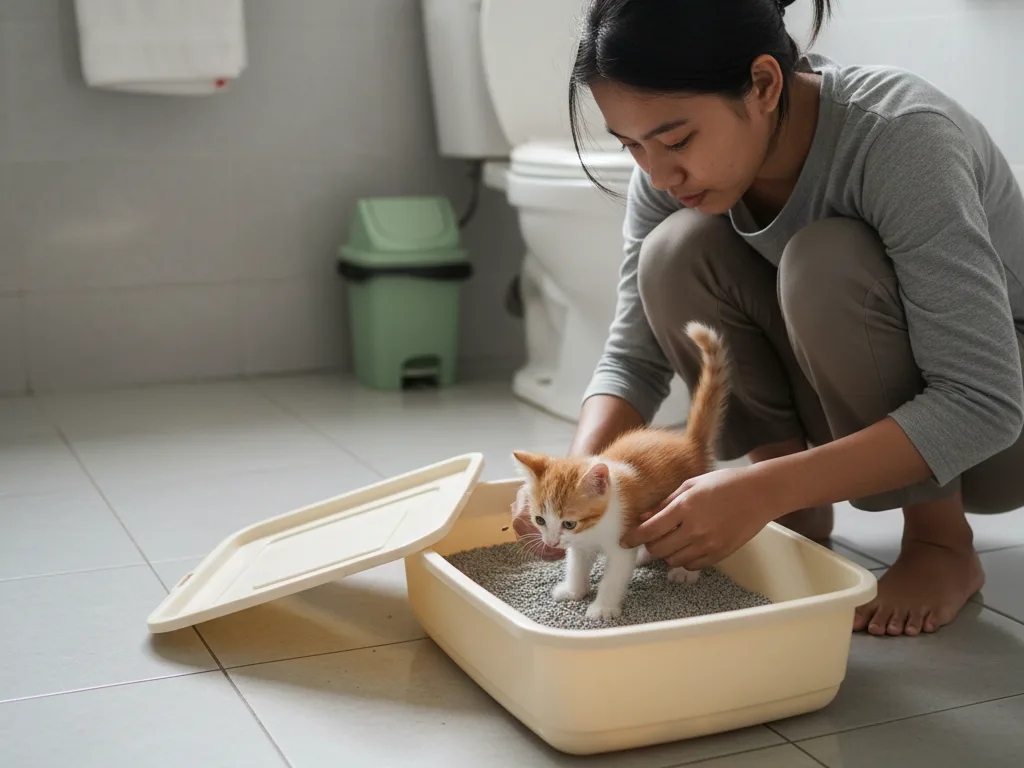
The good news: cats already have an instinct to bury their waste — meaning litter box training is much easier than potty training a dog. The bad news: when a cat "refuses" the litter box, there's a specific reason that needs to be identified before you get frustrated.
This article provides a step-by-step guide to training cats — from new kittens to adult cats with established bad habits — and how to handle a cat that has suddenly started going outside the box.
Step 1: Choose the Right Litter Box
Don't Wait Until It's Too Late!
Not all cats are compatible with all types of litter boxes:
Open Litter Box
Most common, easy to clean. Suitable for most cats, especially larger ones that need more space.
✓ Recommended for kittens and adult cats just learning
Covered/Hooded Litter Box
More private and reduces odor. However, some cats dislike feeling trapped or the concentrated smell inside.
⚠ Don't use for cats that are just learning — too intimidating
Ideal size: The litter box should be at least 1.5× the length of the cat's body. A large cat forced to use a small box will be uncomfortable and find somewhere else to go.
Step 2: Choose the Right Litter
- Clumping litter (bentonite) — first choice for training. Fine-textured, clumps easily for cleaning, preferred by most cats.
- Silica gel litter — absorbs odor better, long-lasting, but not all cats like the sharp texture.
- Tofu/organic litter — eco-friendly, low dust. A valid alternative but introduce gradually.
- Ideal litter depth: 5–7 cm — enough for the cat to dig and bury comfortably.
Step 3: Place It in the Right Location
- A quiet and private spot — away from the washing machine, frequently opened doors, or high-traffic areas
- Away from food and water bowls — cats don't like eating near where they eliminate
- Easily accessible — not inside a cupboard or behind a door that can close
- For multi-story homes: provide a litter box on each floor
Step 4: Training Kittens (0–4 Months)
- Place the kitten in the litter box after meals, after waking up, and after playtime — these are the most likely times for elimination.
- Let the kitten sniff and dig. Don't force it or hold it inside the box — let it explore freely.
- If the kitten starts squatting anywhere else, gently pick it up and move it to the litter box immediately.
- Offer praise when the kitten successfully uses the litter box.
- Clean up accidents with an enzymatic cleaner — not plain water or detergent. Remaining scent will attract the cat back to the same spot.
Step 5: Dealing with a Cat That Goes Outside the Box
Cause Checklist — Rule These Out First
- Dirty litter box (ideally scoop daily, full litter change 1–2x per week)
- Litter box location is uncomfortable or too busy
- Sudden litter change — cats dislike abrupt texture changes
- A new cat or environmental change (stress)
- Medical issue: UTI, bladder stones, constipation — if suspected, see a vet immediately
If the cat is straining, there is blood in the urine, or the cat frequently visits the litter box without producing anything, there is likely a medical issue. Read the complete guide on cats going outside the litter box.
Panggil Dokter ke Rumah
Ideal Litter Box Cleaning Schedule
| Frequency | Action |
|---|---|
| Every day | Scoop clumped waste and urine |
| 1–2x per week | Full litter change, wash the box with clean water (no strong-smelling soap) |
| Once a month | Wash litter box with unscented soap, rinse thoroughly |
| Every 6–12 months | Replace with a new litter box (old plastic absorbs odors even after washing) |
Frequently Asked Questions
How long does it take to train a cat to use the litter box?
What is the best litter for a cat's litter box?
How many litter boxes do I need?
My previously trained cat has suddenly stopped using the litter box — why?
Medically Reviewed by
Birawa Vet Medical Team
This article has been verified by our medical team to ensure veterinary information accuracy.
The information in this article is for general educational purposes only and is not a substitute for direct consultation with a veterinarian.
Every pet has unique conditions. Do not hesitate to seek professional help if your pet is sick.
Share Article
Read Next
View All
Dog Biting People: Causes, Dangers, and How to Handle It
Is your dog suddenly aggressive and biting people? Understand the causes of aggression in dogs, when it's dangerous and requires a. Free WhatsApp consultation.

Cat Aggressive, Biting & Scratching: Causes & Solutions
A cat that suddenly bites or scratches for no apparent reason is often misunderstood as "misbehaving." But behind aggression lies a. Free WhatsApp consultation.

Signs of Stress in Cats, Causes, and How to Help at Home
Cats can't tell you when they're anxious. They show it through behavior — hiding constantly, over-grooming, or sudden aggression. Free WhatsApp consultation.