Key Takeaways
Many serious pet illnesses show no symptoms until they are advanced — and far more expensive to treat. Annual routine checkups are. Free WhatsApp consultation.
Routine Checkups for Cats & Dogs: When, Why, and What the Vet Actually Checks
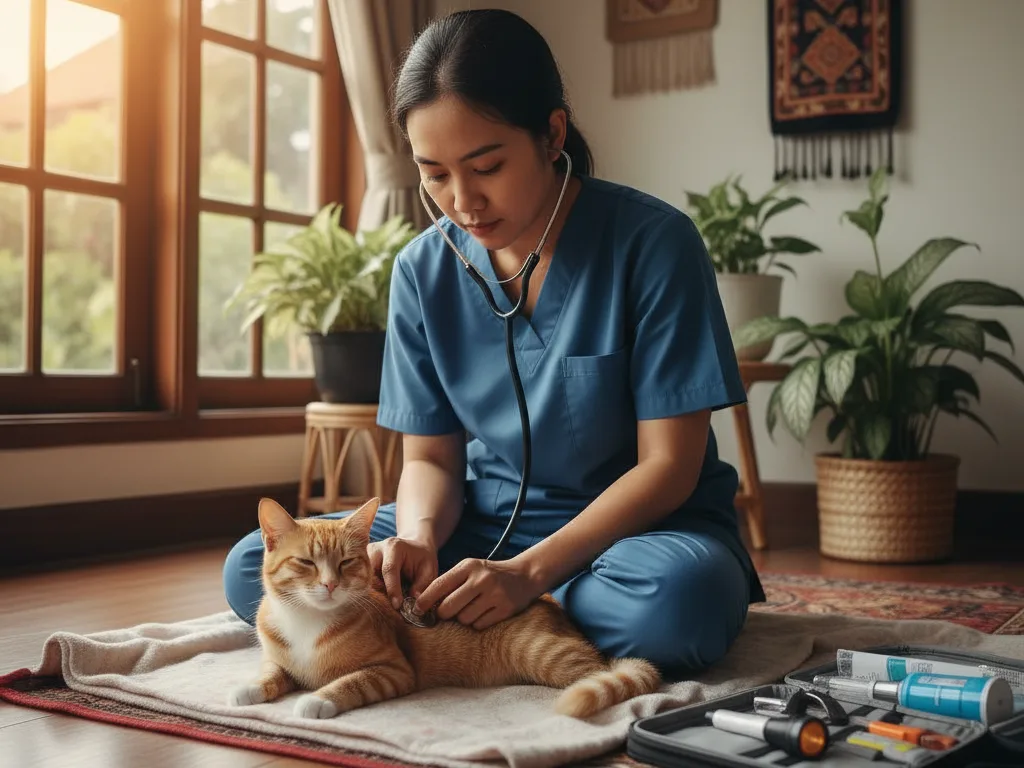
"My cat is perfectly fine — why would I take her to the vet?" — This is one of the most costly misconceptions in pet care. A pet that looks healthy on the outside doesn't mean there is nothing to check on the inside.
A vet is not only called when something is wrong. Routine checkups are the foundation of genuine, lasting health.
Why "Looking Healthy" Is Not Enough
Don't Wait Until It's Too Late!
Chronic Kidney Disease (CKD)
Symptoms only appear once around 75% of kidney function is already lost. Blood tests (SDMA) can detect problems years before symptoms emerge — when management is still highly effective.
Hyperthyroidism
Develops slowly over years. Owners often miss it because changes are gradual. Early detection via T4 levels = simpler and less expensive treatment.
Dental Disease
80% of dogs and cats over 3 years old have some degree of dental disease. Pets rarely show obvious signs of tooth pain — but bacteria from gum disease can enter the bloodstream and damage the heart, kidneys, and liver.
Early-Stage Obesity
Owners often don't realise their pet is becoming overweight because the change is gradual. A vet can objectively assess Body Condition Score and provide nutritional guidance before obesity triggers diabetes or joint problems.
What the Vet Does During a Checkup
Physical Examination (All Ages)
- ✓ Weight & Body Condition Score
- ✓ Body temperature
- ✓ Heart rate & rhythm
- ✓ Breathing pattern & lung sounds
- ✓ Abdominal palpation (liver, spleen, intestines, kidneys)
- ✓ Eyes, ears, teeth & gums condition
- ✓ Skin & coat condition
- ✓ Lymph nodes
- ✓ Joint condition & mobility
Additional Tests (Senior / As Needed)
- ✓ Complete blood count (CBC) — cells, infection, anaemia
- ✓ Chemistry panel — kidneys, liver, blood sugar, electrolytes
- ✓ T4 — thyroid (for cats over 8 years)
- ✓ Urinalysis — kidney function, crystals, infection
- ✓ Fecal test — intestinal parasites
- ✓ Blood pressure (for hypertensive cats / CKD)
- ✓ Abdominal ultrasound — organ structure
Checkup Schedule by Age
| Age | Checkup Frequency | Priority Focus |
|---|---|---|
| 0–1 year (puppy/kitten) | At each vaccine visit (3–4 times) | Vaccination, deworming, normal growth |
| 1–7 years (adult) | At least once a year | Full physical, vaccine boosters, weight |
| 7–10 years (early senior) | Every 6 months | Physical + blood work + urinalysis |
| 10+ years (geriatric) | Every 3–6 months | Full panel + blood pressure + ultrasound |
Checkup at Home — Easier and More Accurate
Pets examined in their own environment are calmer — heart rate and blood pressure readings are more accurate because there is no "white coat syndrome." Birawa Vet doctors bring all basic examination equipment directly to your home.
Book a Routine Home CheckupFrequently Asked Questions
How often should cats and dogs have a vet checkup?
What does a general checkup involve?
Does a pet that looks healthy still need a checkup?
How much does a routine checkup cost for a cat or dog in Jakarta?
Do a checkup and vaccination need to happen at the same visit?
Medically Reviewed by
Birawa Vet Medical Team
This article has been verified by our medical team to ensure veterinary information accuracy.
The information in this article is for general educational purposes only and is not a substitute for direct consultation with a veterinarian.
Every pet has unique conditions. Do not hesitate to seek professional help if your pet is sick.
Share Article
Schedule Home Vaccination
Vet comes to your home. Complete vaccines, official booklet, no clinic queues.
Read Next
View All
A Canary That Stops Singing: When It Is Medical, Not Just Moulting
A canary that stops singing is not always moulting. Learn when the silence is a natural phase and when it signals a health problem that needs a vet. Free WhatsApp consultation.

Sulcata Tortoise Won't Eat: Causes and When to See a Vet
Your sulcata on a food strike? Often it is not about taste but temperature, light, and enclosure care. Learn the causes and when to see an exotic vet. Free WhatsApp consultation.
Hedgehog Refusing Food or Bloating: When to See a Vet
Hedgehog refusing to eat or its belly looks bloated? Learn the warning signs, how it differs from a hibernation attempt, and when to see an exotic vet. Free WhatsApp consultation.