Key Takeaways
Suspect your pet has a fever but don't know how to check? Feeling the ears or nose is not accurate. This complete guide covers how. Free WhatsApp consultation.
How to Take Your Cat's & Dog's Temperature at Home (Step-by-Step)
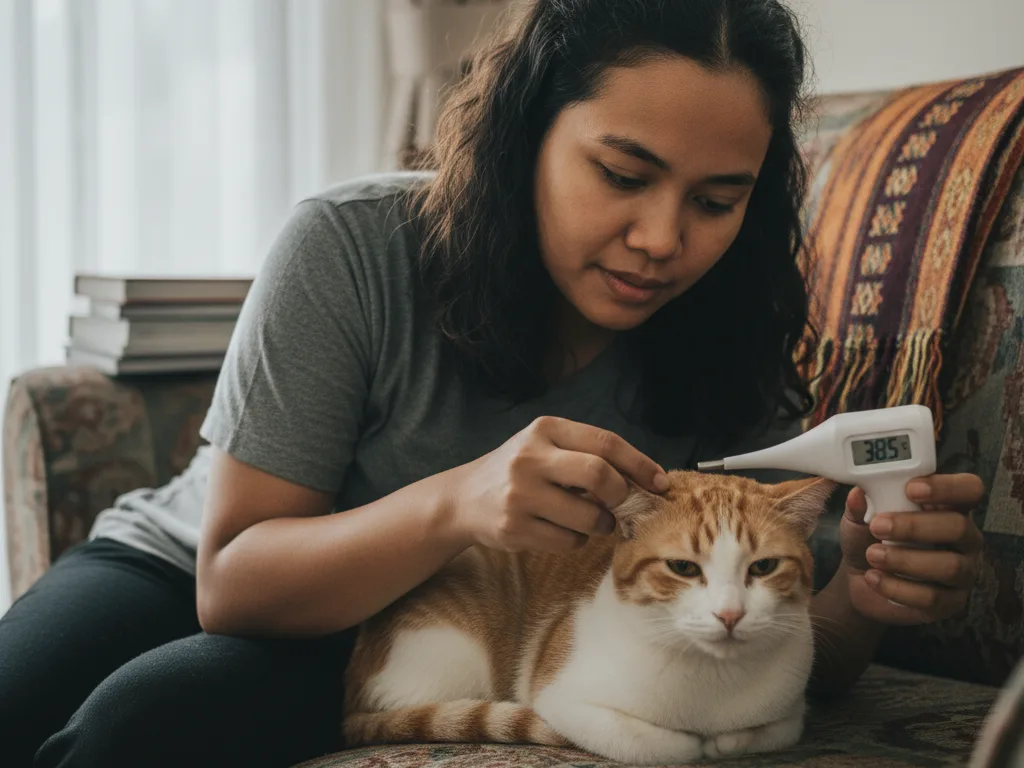
"I think Mochi has a fever — the nose feels warm…" — and then you either panic or do nothing because you don't know how to check properly.
Taking your cat's/dog's temperature at home is a basic skill every pet owner should have. Here's how.
Normal Body Temperature for Cats & Dogs
Don't Wait Until It's Too Late!
Cats (Normal)
38.0–39.2°C
Dogs (Normal)
37.5–39.0°C
Humans (Reference)
36.1–37.2°C
How to Measure Temperature: Rectal Method (Most Accurate)
The rectal method is the gold standard for measuring a pet's temperature — it gives the most accurate result.
-
1
Prepare the digital thermometer and lubricant
Lubricate the tip with petroleum jelly (Vaseline) or KY gel. Turn on the thermometer and wait for the ready signal.
-
2
Position the animal
Cats: gently hold on a table in a standing position or lying on its side. One person holds the body and head, the other takes the measurement.
-
3
Insert the thermometer
Lift the tail gently, insert the tip of the thermometer about 2–3 cm (1–1.5 inches) into the rectum. Don't force it if there is resistance.
-
4
Wait for the beep, then read the result
Clean with alcohol after use.
Interpreting the Result
Below 37.5°C
Hypothermia
Temperature too low. Could indicate shock, poisoning, or a critical condition. Warm the animal slowly and contact a vet immediately.
38.0–39.2°C
Normal
Temperature within normal range.
39.3–40°C
Mild Fever
Monitor closely. If still active and willing to eat, observe for 12–24 hours. If not improving or other symptoms appear, contact a vet.
Above 40°C
Serious Fever — Contact a Vet
Above 41°C is a medical emergency — can cause permanent organ damage.
What NOT to give a pet with a fever:
- Paracetamol (acetaminophen) — HIGHLY TOXIC to cats, dangerous to dogs
- Ibuprofen — toxic to cats and dogs, causes kidney failure
- Aspirin — toxic to cats
Pet Running a Fever? The Vet Can Come to You
No need to stress about transporting a sick pet. A Birawa Vet doctor can come to your home for an examination, antipyretic/antibiotic injection, and blood sampling if needed.
Book a Home Vet VisitFrequently Asked Questions
What is the normal body temperature for cats and dogs?
Does a dry or warm nose mean a cat has a fever?
What thermometer is best for cats and dogs?
My cat has a temperature of 39.5°C — does it need a vet?
What can be done to reduce a cat's/dog's fever at home?
Medically Reviewed by
Birawa Vet Medical Team
This article has been verified by our medical team to ensure veterinary information accuracy.
The information in this article is for general educational purposes only and is not a substitute for direct consultation with a veterinarian.
Every pet has unique conditions. Do not hesitate to seek professional help if your pet is sick.
Share Article
Read Next
View All
Cat Grooming at Home vs Salon: Which Is Cheaper and Safer?
Cat grooming at a salon vs a mobile groomer vs during a vet visit — which is more affordable and safer? A comparison of costs. Free WhatsApp consultation.
When Does a Dog Need Dental Scaling? Signs, Procedure & Cost 2026
Dog dental scaling is more than just cleaning — it's a medical procedure to prevent heart and kidney infections. Learn when your. Free WhatsApp consultation.
How Many Vaccines Does a Dog Need Per Year? Schedule & Cost
How many times a year does a dog need vaccines? Complete 2026 dog vaccination schedule: from puppy to adult, core and non-core. Free WhatsApp consultation.