Key Takeaways
Your dog is suddenly lethargic, reluctant to move, and refuses to walk? Learn the 8 most common causes — from mild to emergency . Free WhatsApp consultation.
Dog Suddenly Weak & Won't Walk: 8 Causes and When to See a Vet
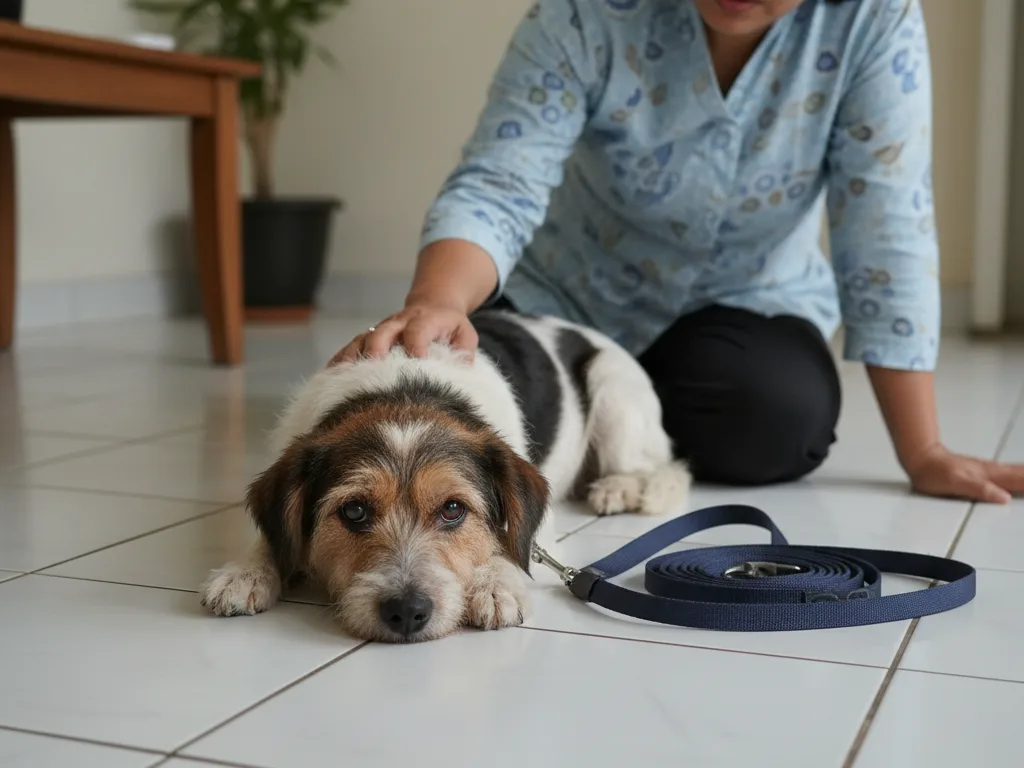
A normally energetic dog that suddenly refuses to move, won't go for a walk, or just lies around all day is showing a sign that should not be ignored. Lethargy in dogs can mean many things — from ordinary fatigue to a life-threatening emergency.
8 Causes of a Weak, Reluctant-to-Walk Dog
1. Fatigue or Overexertion
After very active play or exercise, a dog can be lethargic for 12–24 hours. This is normal. Make sure your dog stays hydrated and gets enough rest.
2. Heat Stress / Overheating
In Indonesia's hot climate, thick-coated or short-nosed breeds are very susceptible. Signs: panting, excessive drooling, red gums. This can become an emergency (heat stroke) — cool the dog down with water and take them to a vet immediately.
3. Pain / Injury
A dog in pain (leg, back, or internal injury) will often avoid moving. Check whether the dog is limping, flinching when touched in certain areas, or whimpering when moving.
4. Infection or Fever
A fever above 39.5°C makes dogs lethargic, causes loss of appetite, and makes them avoid activity. Check temperature with a rectal thermometer — normal range for dogs is 38–39°C. Read how to measure your dog's body temperature.
5. Digestive Issues
Nausea, diarrhea, or excess gas can make a dog reluctant to move. Watch for vomiting, diarrhea, or a bloated abdomen (especially in large breeds — can be a sign of GDV, which is a surgical emergency).
6. Anemia or Blood Disorders
Parasitic worms, tick-borne diseases (Ehrlichiosis, Babesiosis), or internal bleeding can cause anemia. Signs: pale or white gums, severe lethargy, rapid breathing. This is an emergency.
7. Heart or Respiratory Problems
Early heart failure often presents as reduced exercise tolerance — the dog tires quickly, coughs when lying down, or breathes heavily. More common in older dogs and certain breeds (Cavalier King Charles, Doberman).
8. Poisoning
Food poisoning, pesticides, or household chemicals can cause sudden weakness, vomiting, diarrhea, or seizures. Check the environment — did the dog eat something? This is an emergency.
Emergency Signs — Go to a Vet Immediately
- Pale, white, or bluish gums
- Cannot stand or is unresponsive
- Very labored or irregular breathing
- Severely bloated and hard abdomen (especially in large dogs)
- Seizures or tremors
- Severe lethargy after ingesting something suspicious
Panggil Dokter ke Rumah
How to Assess a Lethargic Dog at Home
- Check the gums — press the gum and release (capillary refill time). Normal: pink color returns within 1–2 seconds. Pale or slow to return = a serious sign.
- Measure rectal temperature — normal is 38–39°C. Above 39.5°C = fever. Below 37.5°C = hypothermia (also dangerous).
- Check hydration — pinch the skin on the back of the neck and release. Skin that springs back quickly = well hydrated. Slow to return = dehydrated. Note: the skin tent test is less reliable in overweight dogs (skin may stay elastic despite dehydration) or geriatric/very thin dogs (skin may tent even when hydration is normal) — combine with the gum check.
- Examine the body — gently press the abdomen, legs, and back. Is your dog whimpering or flinching?
Ingin tahu estimasi biaya?
Frequently Asked Questions
My dog is suddenly weak after a vaccine — is this normal?
My dog is lethargic but still eating — is it dangerous?
Can hot weather make a dog lethargic?
How long can a lethargic dog be monitored at home before seeing a vet?
Medically Reviewed by
Birawa Vet Medical Team
This article has been verified by our medical team to ensure veterinary information accuracy.
The information in this article is for general educational purposes only and is not a substitute for direct consultation with a veterinarian.
Every pet has unique conditions. Do not hesitate to seek professional help if your pet is sick.
Share Article
Senior Pets Need Special Care
Not sure if your pet's symptoms are normal or urgent? Tell our vet — we help evaluate without requiring immediate booking.
Read Next
View All
A Canary That Stops Singing: When It Is Medical, Not Just Moulting
A canary that stops singing is not always moulting. Learn when the silence is a natural phase and when it signals a health problem that needs a vet. Free WhatsApp consultation.

Sulcata Tortoise Won't Eat: Causes and When to See a Vet
Your sulcata on a food strike? Often it is not about taste but temperature, light, and enclosure care. Learn the causes and when to see an exotic vet. Free WhatsApp consultation.
Hedgehog Refusing Food or Bloating: When to See a Vet
Hedgehog refusing to eat or its belly looks bloated? Learn the warning signs, how it differs from a hibernation attempt, and when to see an exotic vet. Free WhatsApp consultation.